
Molecule Library
KPV Peptide: What It Is, Possible Benefits and Side Effects
Helpful information about KPV, gut and skin research, product forms, possible side effects, dosage questions and the limits of human evidence.
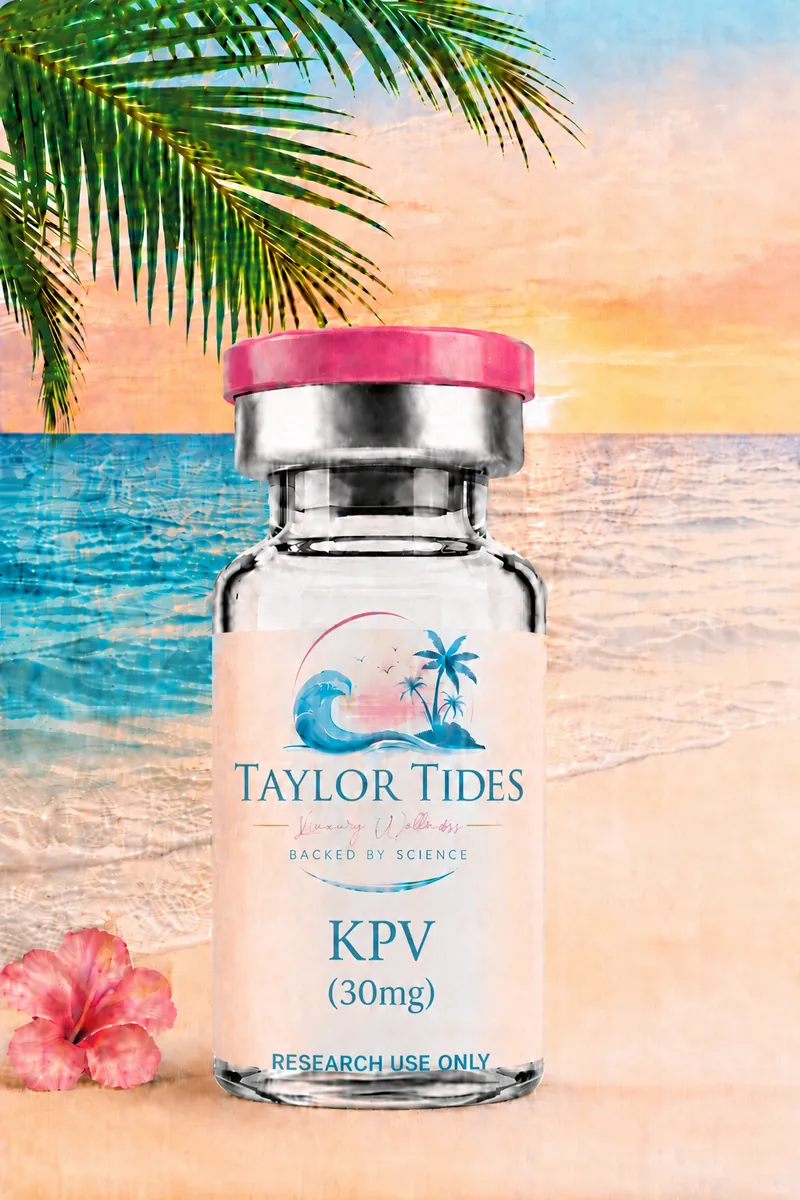
The KPV peptide is being researched for its possible effects on inflammation, digestive problems, skin conditions and wound healing.
Most KPV research has been conducted in cells or animals, not people. Its benefits, side effects, appropriate dosage and long-term safety have not been established in humans.
This information explains why people are interested in KPV, what researchers have found and what remains unknown.
KPV in 30 Seconds
- KPV is made from three connected amino acids. Amino acids are small pieces the body uses to perform many functions.
- It comes from a small section of a natural hormone called alpha-MSH.
- Early research has examined inflammation, intestinal health, skin conditions and wound healing.
- The FDA found no clinical studies or human exposure data for KPV.
- Oral, injectable, topical and nasal products are sold, but none of these forms has been proven safe or effective.
- There is no established dosage for humans.
What Is the KPV Peptide?
KPV is made from three amino acids:
- K: lysine
- P: proline
- V: valine
That is why it is called KPV.
KPV is also a small section of alpha-melanocyte-stimulating hormone, commonly shortened to alpha-MSH. This natural hormone helps the body manage several processes, including skin pigmentation and certain parts of the inflammatory response.
Alpha-MSH is the longer message. KPV is a small three-piece section taken from the end of that message.
Manufactured KPV is not the complete natural hormone. It should not be expected to perform all the same functions.
Researchers became interested in KPV because early studies suggest it may influence certain inflammation-related signals without affecting skin pigmentation. Whether this produces a useful medical benefit in people remains unknown.
Why Is KPV Being Researched?
Inflammation is part of the body’s defense and repair system. It helps respond to an injury or infection. When inflammation becomes excessive or continues for too long, it can also damage healthy tissue.
Early laboratory research suggests that KPV may influence some of the signals involved in inflammation. This has created interest in KPV for:
- Intestinal inflammation
- Inflammatory bowel disease
- Eczema and psoriasis
- Acne and rosacea
- Wound healing
- Other inflammation-related problems
These are research topics and claims used to promote products. They are not proven medical benefits.
A substance can affect cells in a laboratory without producing the same result in a person. It must also reach the correct tissue, remain stable inside the body, produce a meaningful effect and do so without causing unacceptable harm.
What Has Been Studied in People?
The lack of reliable human evidence is the largest limitation.
Published KPV research has primarily involved isolated cells, human tissue studied outside the body and animal models.
In its 2026 evaluation, the FDA reported finding no clinical studies or human exposure data for KPV through any delivery method. Therefore, there is not enough human evidence to establish:
- Whether KPV provides a meaningful benefit
- Which form might work
- What dosage might be appropriate
- How frequently side effects occur
- Whether repeated or long-term use is safe
This does not prove that KPV has no effect. It means confident claims about its effects in people go beyond the available evidence.
KPV for the Gut and Intestinal Inflammation
Many KPV searches involve Crohn’s disease, ulcerative colitis, gastritis, irritable bowel syndrome, bloating, food sensitivities and “gut repair.”
These conditions are not the same. They can have different causes and require different treatments.
Cell and mouse studies have explored whether KPV can enter intestinal cells and influence inflammation. Some results support continued research, but they do not demonstrate that KPV treats digestive diseases in people.
Human studies have not established that KPV:
- Treats Crohn’s disease or ulcerative colitis
- Repairs the intestinal lining
- Treats gastritis or irritable bowel syndrome
- Corrects food sensitivities
- Works better orally than by injection
- Can replace established medical care
Persistent abdominal pain, bleeding, unexplained weight loss, fever, severe diarrhea or dehydration should be evaluated by a medical professional rather than treated as ordinary inflammation.
KPV for Eczema, Psoriasis and Other Skin Problems
KPV is also promoted for eczema, psoriasis, acne, rosacea, redness and wound healing.
Early cell and animal research provides a reason to study these possibilities, but human clinical evidence has not established KPV as an effective skin treatment.
Some frequently cited skin studies investigated KdPT, a related peptide, rather than KPV. Results involving one substance should not automatically be presented as evidence for the other.
Experiences shared online are inconsistent. Some people report improvements, while others describe irritation, new skin problems or no noticeable change. These experiences can reveal questions worth studying, but they cannot prove that KPV caused the result.
Several skin conditions can appear similar while requiring very different care. Obtaining a correct diagnosis is more important than describing every skin problem as inflammation.
Oral, Injectable, Topical and Nasal KPV
KPV products are promoted in several forms. They should not be considered interchangeable.
| Form | Why some people consider it | Important unknowns |
|---|---|---|
| Oral | It is convenient and may come into contact with the digestive tract | Absorption, breakdown during digestion and effectiveness |
| Injectable | It is assumed to produce more reliable exposure | Dosage, effectiveness, sterility and short-term and long-term safety |
| Topical | It is applied directly to a skin problem | Skin penetration, suitable concentration, irritation and effectiveness |
| Nasal | It may be absorbed through nasal tissue | Absorption, local irritation, dosage, effectiveness and long-term safety |
How a product is used changes how it enters the body, where it travels and what risks it may create. Human studies have not established which form, if any, provides a meaningful benefit.
KPV vs. BPC-157
KPV and BPC-157 are frequently compared or combined in online peptide discussions. They are different experimental substances.
| Question | KPV | BPC-157 |
|---|---|---|
| What is it? | A three-amino-acid section of alpha-MSH | A laboratory-made peptide based on part of a protein associated with gastric juice |
| Why is it researched? | Inflammation involving the gut, skin and other tissues | Injuries, tissue repair, digestive problems and inflammation |
| Reliable human evidence | Extremely limited | Extremely limited |
| FDA approved? | No | No |
| Established human dosage? | No | No |
KPV is sometimes called an “inflammation peptide,” while BPC-157 is called a “repair peptide.” These are informal descriptions, not proven medical classifications.
Reliable human studies have not shown that one is better than the other or that combining them improves results. Combining experimental substances also makes it harder to identify which one caused a benefit or adverse reaction.
Learn more about the BPC-157 peptide.
What Does the Cancer Research Mean?
One mouse study examined KPV in a model of colon cancer associated with ongoing intestinal inflammation.
That study did not demonstrate that KPV prevents, treats or cures cancer in people. It also did not establish whether KPV is safe for someone who currently has cancer, previously had cancer or is receiving cancer treatment.
These situations require guidance from a qualified medical professional who understands the person’s diagnosis and treatment plan.
KPV Side Effects, Product Quality and Safety
The actual frequency of KPV side effects is unknown because adequate human safety studies have not been conducted.
Online discussions include reports of:
- Fatigue
- Dizziness
- Headaches or migraines
- Nausea and other digestive symptoms
- Skin changes or irritation
- Redness, pain or swelling at the injection site
- No noticeable effect
These reports cannot establish how often a reaction occurs or prove that KPV caused it. Other substances, health conditions, incorrect labeling, contamination and product quality can influence what a person experiences.
Injectable products create additional concerns involving identity, concentration, sterility, contamination and endotoxins. Endotoxins are harmful materials left behind by certain bacteria. They may be present even when a product appears clear and clean.
KPV’s possible interactions with medications, supplements, pregnancy, breastfeeding, cancer, immune-system conditions and other chronic illnesses have not been adequately studied.
Useful questions when evaluating a product include:
- Is it KPV free base, KPV acetate or another substance?
- How were its identity and concentration verified?
- Was the finished product tested for impurities?
- If it is injectable, was it tested for sterility and endotoxins?
- Can the laboratory report be matched to the exact product and lot?
- What human evidence supports the claims?
- Who should be contacted if an adverse reaction occurs?
A certificate of analysis, commonly shortened to COA, is a laboratory report describing selected test results. It may provide useful information, but it does not automatically prove that a product is safe, sterile, correctly labeled or clinically effective.
Is There an Established KPV Dosage?
There is no human KPV dosage established through reliable evidence.
Online protocols, vendor charts, clinic instructions and repeated recommendations do not establish a medically validated dose. Researchers would first need to determine how KPV is absorbed, how long it remains in the body, what amount might produce an effect and what amount might cause harm.
A milligram amount shown on a label describes the claimed quantity. It does not prove the product’s identity, purity, sterility, safety or effectiveness.
Because human dosage and safety have not been established, this page does not provide injection, reconstitution, cycling or treatment instructions.
Is KPV FDA Approved?
No. KPV is not an FDA-approved medicine for digestive problems, skin conditions, inflammation, wound healing or any other promoted use.
The FDA evaluated KPV during its 2026 review of substances being considered for certain compounded preparations. That review and the related advisory committee discussion were not drug approvals.
A product’s availability from a clinic, pharmacy or store also does not establish that it is FDA approved, safe or effective.
Frequently Asked Questions
What does KPV do?
Cell and animal studies suggest that KPV may influence certain inflammatory signals. Its effects and medical benefits have not been established in people.
Is KPV good for gut health?
Laboratory and mouse studies provide a reason to investigate KPV in the intestine. Human research has not demonstrated that it improves gut health or treats a digestive condition.
Does KPV help with eczema or psoriasis?
Early research has examined skin-related inflammation, but human clinical evidence has not established KPV as a treatment for eczema or psoriasis.
Is oral KPV better than injectable KPV?
No reliable human study has established that oral KPV is better, worse, or safer than injectable KPV. Each delivery method has different risks and unanswered questions.
What are the side effects of KPV?
Reliable figures for human side effects are unavailable. Online reports include fatigue, headaches, dizziness, digestive symptoms, skin changes, and injection-site reactions, but they cannot establish cause or frequency.
The Bottom Line
KPV is a peptide made from three amino acids and related to a natural hormone involved in inflammation and other body processes. Early cell and animal studies provide a reason to continue investigating it, especially in connection with intestinal and skin inflammation.
The important limitation is simple: reliable human evidence is missing. Its benefits, dosage, side effects, interactions and long-term safety have not been established.
Personal experiences, commercial claims and detailed online protocols do not fill that gap. Before making decisions about the KPV peptide, it is important to separate what early research suggests from what has actually been demonstrated in people.
This page provides general educational information. It does not offer medical advice, diagnose a condition, recommend a product or provide dosing, reconstitution, injection or treatment instructions.
KPV has not been established as safe or effective for the uses discussed here. Questions about persistent digestive symptoms, skin conditions, wounds, injections, possible adverse reactions, medication interactions or experimental peptide use should be discussed with a qualified healthcare professional.
Sources and Further Reading
- PubChem: KPV peptide, also identified as MSH (11-13)
- Alpha-MSH-Related Tripeptides and Inflammatory Signaling
- KPV Transport and Intestinal Inflammation Research
- Peptide Transport and Inflammatory Bowel Disease
- KPV in a Mouse Model of Inflammation-Associated Cancer
- FDA KPV Safety and Effectiveness Evaluation
- July 2026 Pharmacy Compounding Advisory Committee Meeting
Author: TaylorTides. Medical review status: Not reviewed by a licensed clinician. Research reviewed: August 30, 2026.