
Molecule Library
BPC-157 Peptide: What It Is, What Research Shows and What Is Still Unknown
A plain-language guide to BPC-157, claimed benefits, human evidence, side effects, FDA status, TB-500, and the questions research has not answered.
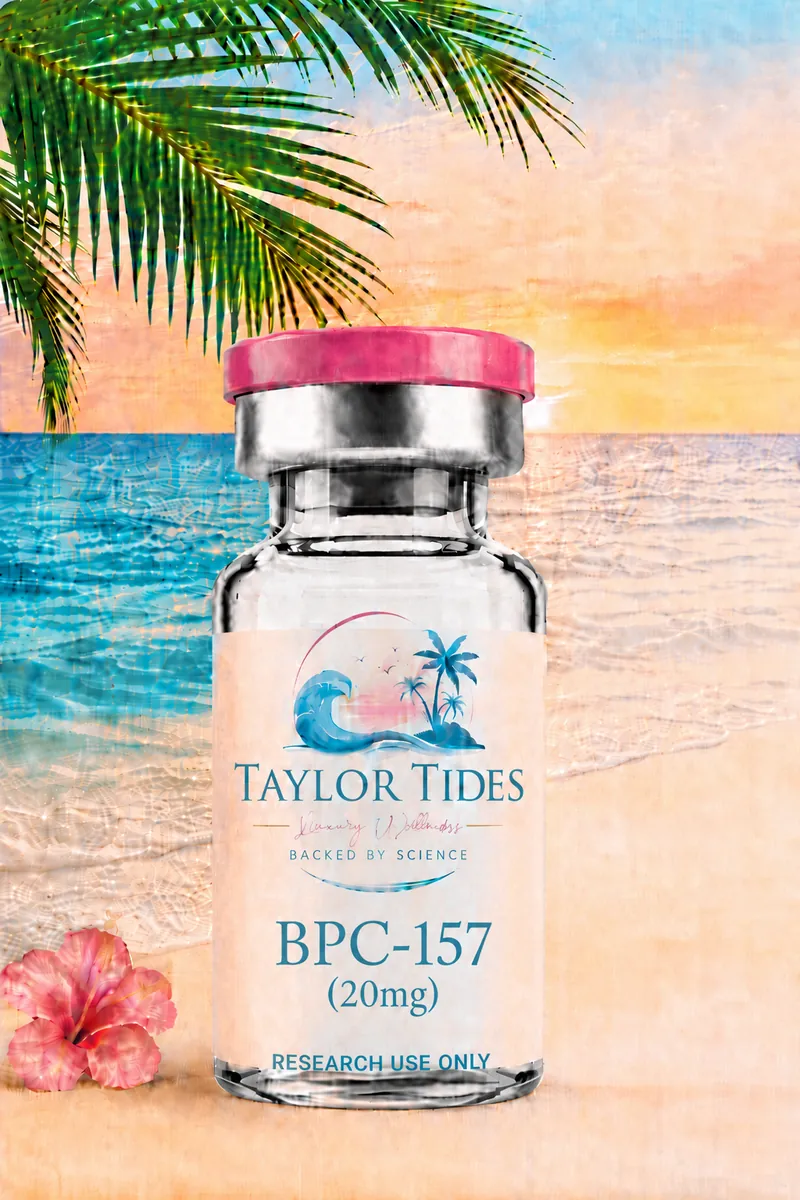
Catalog sizes: 10mg vial · 20mg vial.
BPC-157 peptide is an experimental peptide that people are researching for injuries, recovery, joint problems, and digestive concerns. This guide explains what BPC-157 is, why people are interested in it, what human research can show, and what remains unknown about its benefits and side effects. A peptide is simply a small chain of amino acids. You can think of amino acids as tiny building pieces the body uses to make larger biological tools, including proteins.
BPC-157 is a laboratory-made chain of 15 amino acids. Its design came from research involving substances associated with the stomach and gastric juice. That origin is one reason you may see it described online as “natural” or as something already found in the human body. That description can be misleading. The BPC-157 sold in vials or capsules is a manufactured product.
Most of the excitement around BPC-157 comes from laboratory and animal studies. Human research exists, but it remains small and incomplete. We do not yet have enough reliable evidence to say that BPC-157 heals injuries, treats digestive conditions, or provides the other benefits commonly claimed online.
BPC-157 is not an FDA-approved treatment for any medical condition. Its side effects, long-term risks, effective human dose, and interactions with medications are not well established.
This guide separates what researchers have found from what people report online, what sellers claim, and what scientists still do not know.
BPC-157 in 30 Seconds
- What is it? A laboratory-made peptide containing 15 amino acids.
- Why are people researching it? It is discussed in connection with injuries, recovery, joint pain, and digestive problems.
- Does it work? Human evidence is too limited to establish it as an effective treatment.
- Is it safe? Human research has not established its common side effects or long-term risks.
- Is it FDA approved? No.
- What about Reddit stories? They reveal real questions and experiences but cannot prove what caused an outcome.
What Is the BPC-157 Peptide and What Does Its Name Mean?
BPC stands for Body Protection Compound. The name came from the research history surrounding the compound. It does not mean scientists have proven that BPC-157 protects the entire human body.
The 157 is part of its research name. It is not a dose, strength, or reference to 157 amino acids. BPC-157 contains 15 amino acids arranged in a particular order.
That order matters. It is similar to using the same letters to make different words. The ingredients may be familiar, but changing their order changes what they communicate.
You may also see BPC-157 called BPC 157, BPC157, Body Protection Compound 157, gastric pentadecapeptide BPC-157, or stable gastric pentadecapeptide. “Pentadecapeptide” simply means a peptide containing 15 amino acids. It does not tell us whether the peptide works or is safe.
Is BPC-157 Natural or Laboratory-Made?
The BPC-157 discussed in research and sold as a product is laboratory-made. Its amino-acid sequence was developed from research involving stomach-associated material. That does not mean a vial, capsule, or compounded preparation is simply a natural substance taken directly from the human body.
“Based on something associated with the body” and “naturally produced in the body in this exact usable form” are not interchangeable claims.
A laboratory-made substance is not automatically dangerous. A substance associated with the human body is not automatically safe. Evidence about the actual product, formulation, and intended use matters more than either label.
Why Are People Researching BPC-157?
Most people do not begin by wondering about a chain of 15 amino acids. They begin with a problem. They may have a tendon injury that is taking months to improve. Their shoulder, knee, or elbow may still hurt after physical therapy. Others encounter BPC-157 while researching digestive and gut-health questions.
Online discussions most often connect BPC-157 with tendon and ligament injuries, muscle and recovery questions, joint pain, wound or tissue repair, inflammation, and stomach or intestinal concerns.
These are the reasons people research BPC-157. They are not a list of proven medical uses.
How Might BPC-157 Work?
When tissue is injured, cells send signals, inflammation changes, blood carries oxygen and nutrients to the area, and new tissue is gradually organized.
Researchers are studying whether BPC-157 affects some of those signals, including processes involving blood vessels, inflammation, cell movement, and tissue repair. You may encounter the word angiogenesis, which means the formation of new blood vessels.
A proposed mechanism is an explanation of how researchers think something might work. It is not the same as evidence that it produces a meaningful medical benefit.
What Has Actually Been Studied?
Laboratory and animal research
Most published BPC-157 research has involved cells, tissues, or animals, particularly rats. These studies can identify possible biological effects and help researchers decide what to investigate next. They cannot establish that BPC-157 safely treats an injury or illness in a person.
Small human reports
A few small human reports and pilot studies have been published. Some participants reported improvement in knee pain or bladder-related symptoms. These studies involved very few people and did not provide the controlled comparison needed to determine whether BPC-157 caused the improvement.
One very small safety pilot involved only two adults. Finding no major problem in two previously exposed people during short follow-up cannot establish that a substance is safe for the wider population.
Registered clinical trials
An older Phase 1 study was registered to examine safety and how BPC-157 moves through the body. Public results have not been posted, so the registration itself does not provide evidence of safety or effectiveness.
A newer randomized Phase 2 study is recruiting people with a particular type of hamstring injury. Participants are expected to receive BPC-157 or a placebo while following a rehabilitation program. This controlled study has not produced results yet.
A placebo is an inactive comparison. It helps researchers determine whether an outcome is more likely to come from the substance being studied rather than expectations or other factors.
Does BPC-157 Work?
The honest answer is that we do not have enough reliable human evidence to say that BPC-157 works as a treatment for injuries, pain, or digestive problems.
That answer does not mean every positive report is false. It means the research cannot reliably separate the peptide from time, rehabilitation, another treatment, expectations, or normal healing.
BPC-157 may be worth studying. That is different from knowing that it works.
Claimed BPC-157 Benefits Versus the Evidence
| Claim people encounter | What evidence exists | What remains unknown |
|---|---|---|
| “BPC-157 heals tendons and ligaments.” | Laboratory and animal studies have explored tendon and ligament repair. | Whether it produces meaningful healing in people, for which injuries, and with what risks. |
| “BPC-157 speeds muscle recovery.” | Preclinical research has examined muscle injury and repair. | Whether it shortens human recovery beyond rehabilitation and normal healing. |
| “BPC-157 reduces joint pain.” | A very small uncontrolled human report described improvement among some people with knee pain. | Whether BPC-157 caused the improvement and whether results would hold up in a controlled trial. |
| “BPC-157 helps the gut.” | Much of the digestive research comes from animal studies. | Whether it safely treats common digestive complaints in people. |
| “BPC-157 reduces inflammation.” | Laboratory and animal studies suggest possible effects on processes involved in inflammation. | Whether those findings produce a useful and safe medical benefit in humans. |
| “Many people online say it worked.” | Personal reports show why people are interested and what outcomes they notice. | Whether the product caused the outcome, what it contained, and how often similar results occur. |
BPC-157 Side Effects and Safety Questions
BPC-157 has not been studied well enough in people to establish its common side effects or long-term risks. That is different from saying it has no side effects.
FDA reviewers have raised concerns involving unwanted immune-system reactions, peptide impurities, uncertainty about the active ingredient, limited toxicity testing, and missing information about cancer risk and long-term exposure. Animal-study signals included changes involving blood-clotting measurements and the liver.
These findings do not prove that every person using BPC-157 will experience liver or clotting problems. They show that important safety questions remain unresolved.
What do people report online?
Some people describe less pain or improved recovery. Others report no benefit. Reported unwanted experiences include headaches, nausea, tiredness, sleep changes, anxiety, panic, low mood, emotional flatness or anhedonia, and pain that continued or seemed to worsen.
Anhedonia means a reduced ability to feel pleasure or interest.
These are personal reports, not an established side-effect list. Product contents, other substances, existing conditions, reporting bias, and unrelated causes are often unknown.
Anyone experiencing severe, persistent, or concerning symptoms should seek qualified medical care. Sudden breathing problems, swelling, chest pain, fainting, severe confusion, or other emergency symptoms require immediate attention.
Product Quality Is Part of the Safety Question
- Identity: Is the substance actually BPC-157?
- Purity: How much is the intended substance rather than impurities?
- Potency: Does the product contain the amount claimed?
- Sterility: Is an injectable product free from microorganisms that could cause infection?
- Endotoxins: Is it free from certain bacterial materials that can cause serious reactions?
A certificate of analysis, often shortened to COA, reports particular tests. A purity result does not necessarily prove sterility, correct potency, clinical effectiveness, or suitability for human use. The Taylor Tides plain-language glossary explains other unfamiliar research terms used throughout the Molecule Library.
Oral BPC-157, Capsules and Injections
BPC-157 is discussed online in several forms. People frequently claim oral BPC-157 products are better for digestive concerns and injections are better for injuries. Reliable human evidence has not established that comparison.
Different routes can behave differently after entering the body. Injectable products also create risks involving contamination, infection, incorrect preparation, and dosing errors.
There is no validated human dosing schedule that Taylor Tides can present as established medical guidance. Detailed online instructions do not prove that a protocol was established through controlled human research.
Is BPC-157 FDA Approved?
No. BPC-157 is not an FDA-approved drug or treatment.
In July 2026, an FDA advisory committee discussed BPC-157-related substances and pharmacy compounding. The committee’s recommendation was advisory and non-binding. It did not turn BPC-157 into an approved treatment or prove that it is safe and effective.
A compounded preparation is not the same as an FDA-approved drug. FDA does not review compounded products in the same way it reviews an approved drug before marketing.
Compounding means a licensed pharmacy prepares a medication for a particular need. A compounded preparation is still not an FDA-approved product.
Is BPC-157 Legal?
There is no useful one-word answer for every person and situation. The answer can depend on location, manufacturing, labeling, intended use, and rules applying to athletes, military personnel, or particular professions.
A website offering BPC-157 for sale does not prove that the product is FDA approved, legally marketed for human use, or appropriate for personal use.
Is BPC-157 Banned for Athletes?
Yes. BPC-157 is prohibited under the World Anti-Doping Code as an unapproved substance. Competitive athletes should verify substances through their governing body or a qualified anti-doping resource.
BPC-157, TB-500 and the Wolverine Stack
TB-500 is another experimental peptide discussed in tissue-repair research. Online sources do not always use the name consistently, so products carrying the TB-500 label may not all describe the same substance or formulation.
BPC-157 and TB-500 are frequently discussed together because both have been studied in connection with tissue repair. That does not prove the popular explanation that BPC-157 repairs a particular injury locally while TB-500 coordinates healing throughout the body. Taylor Tides examines each substance separately before comparing the claims made about using them together.
The Wolverine Stack is an informal nickname for using BPC-157 and TB-500 together. It is a memorable community and marketing term, not an FDA-approved treatment or established medical protocol.
Reliable human trials have not proven that combining the peptides improves healing or safety. A true comparison would need to study BPC-157 alone, TB-500 alone, the combination, and an appropriate control.
How to Evaluate BPC-157 Claims
Before accepting a claim, ask whether the research involved people, how many participated, whether there was a comparison group, what outcome was measured, whether the study was published in full, and whether the tested product matches the one being discussed.
Be cautious when an animal study becomes “clinically proven,” a possible mechanism becomes “guaranteed healing,” a personal story becomes “works for everyone,” or a purity test becomes “safe for human use.”
Frequently Asked Questions About BPC-157
What is BPC-157 in simple terms?
BPC-157 is a laboratory-made peptide containing 15 amino acids. It is being researched for possible effects involving tissue repair, inflammation, blood vessels, and the digestive system. Reliable human evidence remains limited.
What do people use BPC-157 for?
People commonly research BPC-157 for tendon, ligament and muscle injuries, joint pain, physical recovery, and digestive concerns. These are popular proposed uses, not FDA-approved medical uses.
Does BPC-157 work for tendon or ligament injuries?
Animal research has produced findings that justify further study. Human evidence is not yet strong enough to establish that BPC-157 repairs tendon or ligament injuries.
What are the side effects of BPC-157?
BPC-157 has not been studied in enough people to identify a reliable list of common side effects or estimate how frequently they occur. FDA reviewers have identified unresolved concerns, and people online report varied experiences that cannot establish causation.
Can BPC-157 cause anxiety or anhedonia?
Some forum participants report anxiety, panic, low mood, or anhedonia. Other people report no such problems. Current research cannot establish whether BPC-157 causes these experiences or how frequently they occur.
What is the correct BPC-157 dosage?
A validated human dose or dosing schedule has not been established for treating injuries, pain, or digestive problems. Taylor Tides does not provide dosing, reconstitution, or injection instructions for an experimental peptide.
Is BPC-157 legal and FDA approved?
BPC-157 is not FDA approved. Legal questions depend on the product, location, intended use, and rules applying to the individual.
What is the Wolverine Stack?
The Wolverine Stack is an informal nickname for combining BPC-157 and TB-500. It is not an FDA-approved treatment or established medical protocol, and reliable human trials have not proven the combination effective or safe.
The Bottom Line
BPC-157 is easy to find online and difficult to evaluate responsibly.
There are interesting laboratory and animal findings. There are also small human reports, an older trial registration without public results, and a new controlled study that has not yet produced results. That evidence is enough to justify further research. It is not enough to establish BPC-157 as a safe and effective treatment.
Consumers deserve something more useful than either hype or dismissal. They deserve to know what has been studied, what has not been proven, and which questions still need answers. That is the useful starting point when researching the BPC-157 peptide.
This page provides general educational information. It does not diagnose a condition, recommend a product, or replace advice from a qualified healthcare professional.
Sources and Further Reading
- FDA: BPC-157 safety and evidence briefing
- FDA: July 2026 Pharmacy Compounding Advisory Committee meeting
- ClinicalTrials.gov: Recruiting Phase 2 hamstring-injury study
- ClinicalTrials.gov: Earlier Phase 1 registration
- PubMed: Systematic review of BPC-157 and musculoskeletal healing
- PubMed: Two-person intravenous safety pilot
- PubMed: Small interstitial-cystitis pilot study
- PubMed: Evidence and translational limitations review
- PubMed: Sports-medicine review of injectable peptide use
- USADA: BPC-157 and the Prohibited List
Author: TaylorTides. Medical review status: Not reviewed by a licensed clinician. Research reviewed: August 27, 2026.