
Molecule Library
TB-500 Peptide: What It Is, What Research Shows and What Is Still Unknown
A plain-language guide to TB-500, thymosin beta-4, claimed benefits, human evidence, side effects, FDA status, and unanswered questions.
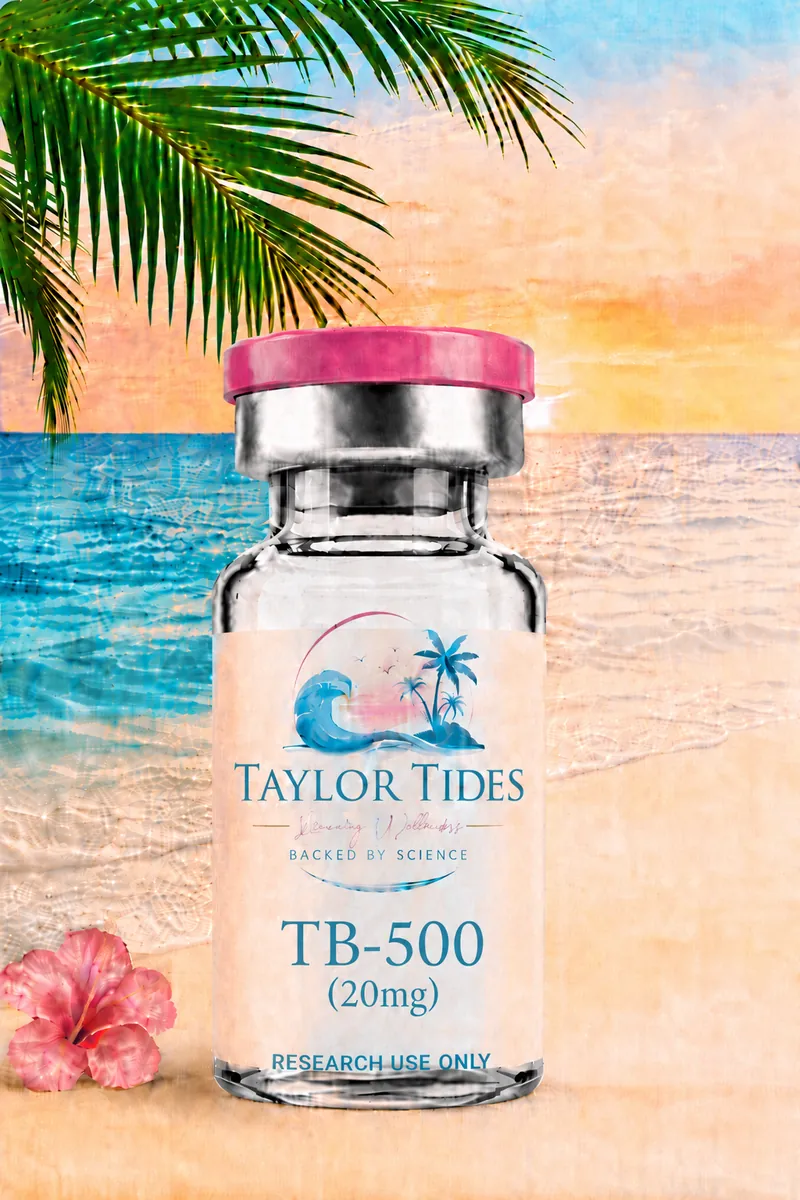
Catalog sizes: TB-500 10mg and TB-500 20mg.
TB-500 peptide is an experimental, laboratory-made substance commonly discussed for injury recovery and tissue repair. You may find claims that it heals tendons, ligaments, muscles, or wounds throughout the body. However, reliable human research has not demonstrated those benefits.
TB-500 is also frequently confused with thymosin beta-4, a natural peptide found in the body. They are related, but they are not the same molecule. Much of the research cited in articles about TB-500 actually studied thymosin beta-4.
This difference matters. TB-500 is not an FDA-approved drug, its human safety profile has not been established, and it is prohibited for athletes subject to World Anti-Doping Agency rules.
This page explains what TB-500 is, why people research it, what the evidence can tell us, and what remains unknown.
TB-500 in 30 Seconds
- What is it? TB-500 is a short, laboratory-made peptide based on part of a larger natural peptide called thymosin beta-4.
- Why are people researching it? It is promoted for tendon, ligament, muscle, wound, and exercise recovery.
- Does it work? There is not enough reliable human evidence to conclude that TB-500 heals injuries or improves recovery.
- Is it the same as thymosin beta-4? No. TB-500 is a shorter fragment of the complete peptide.
- Is it FDA approved? No.
- Is it allowed for tested athletes? No. TB-500 is prohibited under World Anti-Doping Agency rules.
- What is the main research problem? Studies of full-length thymosin beta-4 are often presented as though they prove TB-500 works. They do not answer the same question.
What Is the TB-500 Peptide?
A peptide is a chain of amino acids. Amino acids are small pieces the body connects in different orders to create substances with different functions.
TB-500 is a laboratory-made chain containing seven amino acids. Those seven amino acids match a small section of thymosin beta-4, a natural peptide made of 43 amino acids.
Scientists call TB-500 a peptide fragment. In normal language, it is a shorter piece based on part of a larger peptide.
We can imagine thymosin beta-4 as a complete sentence written with 43 letters. TB-500 copies a seven-letter phrase from that sentence.
Both are peptides, but they are not identical. A copied phrase may preserve part of a sentence's meaning, but we cannot assume it communicates everything expressed by the complete sentence.
The word “fragment” does not mean that TB-500 is accidentally broken, defective, or contaminated. The word describes its size and its relationship to the larger peptide.
Is TB-500 the Same as Thymosin Beta-4?
No. TB-500 and thymosin beta-4 are related, but they are different molecules.
| Question | Thymosin Beta-4 | TB-500 |
|---|---|---|
| What is it? | A natural peptide found in the body | A shorter peptide manufactured in a laboratory |
| How many amino acids does it contain? | 43 amino acids | 7 amino acids |
| Are they chemically identical? | No | No |
| Has it been studied in humans? | Some forms and uses have been studied in people | Reliable human research specifically involving TB-500 is extremely limited |
| Can research on one prove that the other works? | No | No |
A study of thymosin beta-4 may help researchers develop questions about TB-500. It does not demonstrate that a TB-500 product will produce the same result.
This is the most important distinction to remember when evaluating claims about TB-500.
Why Are People Researching TB-500?
Most people discover TB-500 while searching for information about an injury or a slow recovery. Online discussions commonly connect it with tendon and ligament injuries, muscle strains and tears, joint stiffness and mobility, wound healing, recovery after exercise, BPC-157, and the Wolverine Stack.
These are reasons people research TB-500. They are not proven medical uses.
Interest has grown through podcasts, social media, clinics, peptide sellers, and personal testimonials. That popularity can make the evidence appear stronger than it really is. A substance can become widely known before researchers determine whether it works or is reasonably safe for people.
How Might TB-500 Work?
Cells have an internal support system that helps them maintain their shape and move. One important part of that system is a protein called actin.
Thymosin beta-4 interacts with actin in the body. The short section copied to create TB-500 comes from a region associated with that interaction. For this reason, researchers have asked whether TB-500 might influence how certain cells move or participate in repair.
That is a proposed biological mechanism. It does not demonstrate that using a TB-500 product heals an injury.
Some online sources call TB-500 a “cellular coordinator” or a “whole-body healing peptide.” Those descriptions are easy to remember, but reliable human trials have not demonstrated that TB-500 directs repair throughout the body.
What Has Actually Been Studied?
Laboratory research
Laboratory studies expose cells or biological material to a substance under controlled conditions. They can help researchers identify possibilities, but cells in a laboratory container are not the same as an injured person.
In one laboratory wound-closure study reviewed by the FDA, TB-500 did not improve wound closure under the conditions tested.
Animal research
Animal studies can help researchers investigate how a substance behaves inside a living organism. The findings may justify additional research, but they do not demonstrate that people will receive the same benefit or face the same risks.
Human research on thymosin beta-4
Full-length thymosin beta-4 has been studied in people for certain wound-related and eye-related uses. These studies are frequently cited in discussions about TB-500.
They provide information about thymosin beta-4. TB-500 is a different and much shorter molecule, so the results cannot be transferred directly from one substance to the other.
Human research specifically on TB-500
This is the evidence that would matter most when evaluating claims about TB-500.
The FDA's review of the TB-500 peptide reported that it had not identified human-exposure data from drug products containing the TB-500 fragment. Important questions about its effectiveness, side effects, formulations, and long-term safety therefore remain unanswered.
Does TB-500 Work?
There is not enough reliable human evidence to conclude that TB-500 heals tendon, ligament, muscle, wound, or other injuries.
This does not prove that TB-500 has no biological effect. It means we cannot reliably determine whether it produces a meaningful benefit, which injuries might respond, how it compares with rehabilitation, which formulation was used, what risks may occur, or whether any possible benefit outweighs those risks.
Personal stories do not resolve these questions. Pain and movement can change because of time, rest, rehabilitation, changes in training, medication, expectations, another substance, or natural healing.
When someone begins using BPC-157 and TB-500 at the same time, it becomes even more difficult to know what caused an improvement, lack of results, or unwanted symptom.
Claimed TB-500 Benefits Versus the Evidence
| Claim a reader may encounter | What the evidence currently allows us to say |
|---|---|
| TB-500 heals tendons and ligaments | It is widely promoted, but reliable human evidence has not demonstrated this. |
| TB-500 repairs muscle injuries | Proposed mechanisms and preclinical research create interest, but meaningful outcomes in people are unknown. |
| TB-500 accelerates wound healing | Human research exists for full-length thymosin beta-4, not necessarily the TB-500 fragment. |
| TB-500 reduces inflammation | Laboratory and animal findings do not independently demonstrate a useful clinical effect in people. |
| TB-500 improves flexibility or mobility | Personal reports exist, but they do not demonstrate a reliable or lasting effect. |
| TB-500 repairs the whole body | “Systemic repair” is a popular online phrase, not a proven human outcome. |
| TB-500 works better with BPC-157 | The benefits and safety of the combination have not been established in reliable human trials. |
A proposed mechanism, an animal experiment, a thymosin beta-4 study, and a personal testimonial do not represent the same level of evidence.
TB-500 Side Effects and Safety Questions
TB-500 does not have a well-established human safety profile. There is not enough reliable information to identify every possible side effect, determine how frequently reactions occur, or know who may face greater risks.
The FDA has identified concerns involving possible immune reactions, clumping or aggregation of peptide material, peptide-related impurities, limited information about human exposure, and insufficient evidence to determine whether TB-500 products may cause harm.
These concerns do not demonstrate that every product will cause a specific reaction. They do mean it is misleading to describe TB-500 as safe simply because it is related to a natural substance.
In forums, some people have reported headaches, fatigue, dizziness, swelling, changes in sleep, mood changes, palpitations, injection-site reactions, no side effects, and many other experiences.
Those reports do not demonstrate that TB-500 caused a symptom. Many people were also using BPC-157, medications, supplements, or other peptides. In many cases, the identity and quality of the product were also uncertain.
Anyone experiencing chest pain, difficulty breathing, fainting, severe swelling, signs of a serious allergic reaction, or another alarming symptom should seek appropriate medical care.
What Is Actually in a Vial Labeled TB-500?
A label is a claim about a product. It is not independent proof of what the vial contains.
- Identity: Is it actually the seven-amino-acid TB-500 fragment?
- Purity: What proportion of the material is the intended substance?
- Potency: Does it contain the amount stated on the label?
- Sterility: Is it free from microorganisms that could cause an infection?
- Contamination: Does it contain unwanted chemicals or bacterial toxins?
- Stability: Did shipping, storage, heat, light, or time alter the product?
Analytical research has examined products marketed as TB-500 because some may have been mislabeled or adulterated.
A Certificate of Analysis, commonly known as a COA, reports the results of particular laboratory tests. A purity result does not automatically demonstrate identity, potency, sterility, safety, or effectiveness.
A COA can answer only the questions covered by the tests performed. It also does not prove that every vial sold under the same name matches the tested sample.
Does Feeling Better Mean the Injury Has Healed?
Not necessarily. Less pain, better movement, improved exercise performance, tissue healing, restored strength, and lower reinjury risk are related but different outcomes.
A report that a knee or shoulder feels better does not tell us whether a tendon, ligament, muscle, cartilage surface, nerve, or another structure has healed.
The original diagnosis also matters. “Shoulder pain” could describe a muscle strain, tendon injury, joint problem, irritated nerve, fracture, inflammation, or another condition.
Feeling better may encourage someone to return to activity before the injury can safely tolerate the load. TB-500 cannot replace a correct diagnosis or an appropriate evaluation of recovery.
TB-500 Capsules, Oral Products, and Injections
TB-500 is discussed online as an injection, capsule, oral product, nasal product, and blended formulation. The availability of these forms does not demonstrate that they work or are equivalent.
The form can affect how much of a substance reaches the body, whether it remains intact, which tissues are exposed, and what contamination or sterility risks may exist.
There is no standardized, FDA-approved TB-500 formulation or approved human treatment schedule for injury recovery.
Taylor Tides does not provide dosing charts, injection locations, cycle schedules, mixing instructions, or reconstitution instructions. Those instructions would create an appearance of precision that the human evidence does not support.
Is TB-500 FDA Approved?
No. TB-500 is not an FDA-approved drug.
In 2026, an FDA advisory committee considered TB-500-related substances for possible use in certain compounded preparations. An advisory committee reviews evidence and makes recommendations. Its discussion or vote is not the same as FDA approval of a drug.
An FDA-approved drug is a specific product reviewed for a particular use, formulation, dose, and population. A compounded preparation is made by a licensed pharmacy for a particular need under applicable rules. A product labeled “research use only” is intended for laboratory work rather than human treatment.
Online availability does not demonstrate FDA approval, quality, safety, or suitability for personal use.
Is TB-500 Prohibited for Athletes?
Yes. The World Anti-Doping Agency prohibits thymosin beta-4 and its derivatives, including TB-500.
A product being available online does not mean it is permitted. A recommendation from a coach, clinic, or another person also does not replace anti-doping rules.
Athletes subject to testing should confirm current requirements with the appropriate sports organization.
TB-500, BPC-157, and the Wolverine Stack
TB-500 and BPC-157 are different experimental peptides with different structures and research histories.
Online comparisons often claim that BPC-157 acts on a specific injury while TB-500 repairs the whole body. Reliable human research has not demonstrated such a clear distinction between local and systemic action.
Neither peptide is FDA approved. Reliable human evidence has also not demonstrated that they heal injuries or work better when combined.
The Wolverine Stack is an informal name for using or selling BPC-157 and TB-500 together. It is not one peptide, a standardized formulation, an FDA-approved treatment, an established medical protocol, or proof that the substances work better together.
Different sellers may use different amounts or formulations under the same Wolverine name. To learn more about the other component associated with this combination, read the Taylor Tides guide to BPC-157 peptide.
How to Evaluate TB-500 Claims
- Did the research actually study TB-500 or full-length thymosin beta-4?
- Was the study conducted in people, animals, or isolated cells?
- Was the product's chemical identity verified?
- What outcome was measured: cell movement, pain, strength, tissue healing, or return to activity?
- Was there an appropriate comparison or placebo group?
- Were other treatments or peptides used at the same time?
- Is the source selling the product?
- Does the source discuss uncertainty, side effects, and negative findings?
Commercial involvement does not automatically mean that information is false. It does provide a reason to examine the evidence and wording carefully.
Frequently Asked Questions About TB-500
What is TB-500 in simple terms?
TB-500 is a short, laboratory-made peptide based on a small section of thymosin beta-4, a larger peptide naturally found in the body. It is researched and promoted for tissue repair, but reliable human evidence has not demonstrated those benefits.
Is TB-500 the same as thymosin beta-4?
No. Thymosin beta-4 contains 43 amino acids, while TB-500 contains seven. They are related, but they are different molecules.
What do people research TB-500 for?
People commonly research TB-500 for claims involving tendons, ligaments, muscles, wounds, mobility, and recovery after exercise. These are not established FDA-approved uses.
Does TB-500 work for injuries?
There is not enough reliable human evidence to conclude that TB-500 heals injuries.
What are the known TB-500 side effects?
A reliable human side-effect profile has not been established. FDA concerns include possible immune reactions, aggregation of the material, impurities, and insufficient information about human safety.
Is TB-500 FDA approved?
No. Advisory committee consideration, discussions about compounded preparations, and online availability are not the same as FDA approval.
Is TB-500 prohibited for athletes?
Yes. The World Anti-Doping Agency prohibits thymosin beta-4 and its derivatives, such as TB-500.
What is the Wolverine Stack?
The Wolverine Stack is an informal name for using or selling BPC-157 and TB-500 together. It is not one peptide, a standardized formulation, an FDA-approved treatment, or a proven medical protocol.
The Bottom Line
TB-500 is a laboratory-made fragment related to thymosin beta-4. Online, the two substances are often treated as interchangeable, but they are different molecules.
Laboratory research, animal studies, and research involving full-length thymosin beta-4 have generated scientific interest. They have not demonstrated that TB-500 safely heals tendon, ligament, muscle, wound, or other injuries in humans.
An informed decision begins with understanding the injury, reviewing established treatments, confirming which substance was actually studied, and recognizing the limitations of testimonials and commercial claims. That is the responsible starting point when researching the TB-500 peptide.
This page is provided for general education and discussion of research. It is not medical advice and does not replace evaluation or treatment from an appropriately licensed healthcare professional.
Sources and Further Reading
- FDA: TB-500 peptide safety and evidence concerns
- FDA: July 2026 Pharmacy Compounding Advisory Committee meeting
- World Anti-Doping Agency: 2026 Prohibited List
- PubMed: Doping control analysis of TB-500
- PubMed: Research on potentially mislabeled or adulterated TB-500 products
- PubMed: TB-500 metabolism and laboratory wound-healing activity
- PubMed: Thymosin beta-4 and venous ulcers
Author: TaylorTides. Medical review status: Not reviewed by a licensed clinician. Research reviewed: August 28, 2026.