
Molecule Library
GHK-Cu Peptide: What It Is, Possible Benefits and Side Effects
Helpful information about GHK-Cu, topical and injectable forms, skin and hair research, possible side effects, dosage questions and evidence limitations.
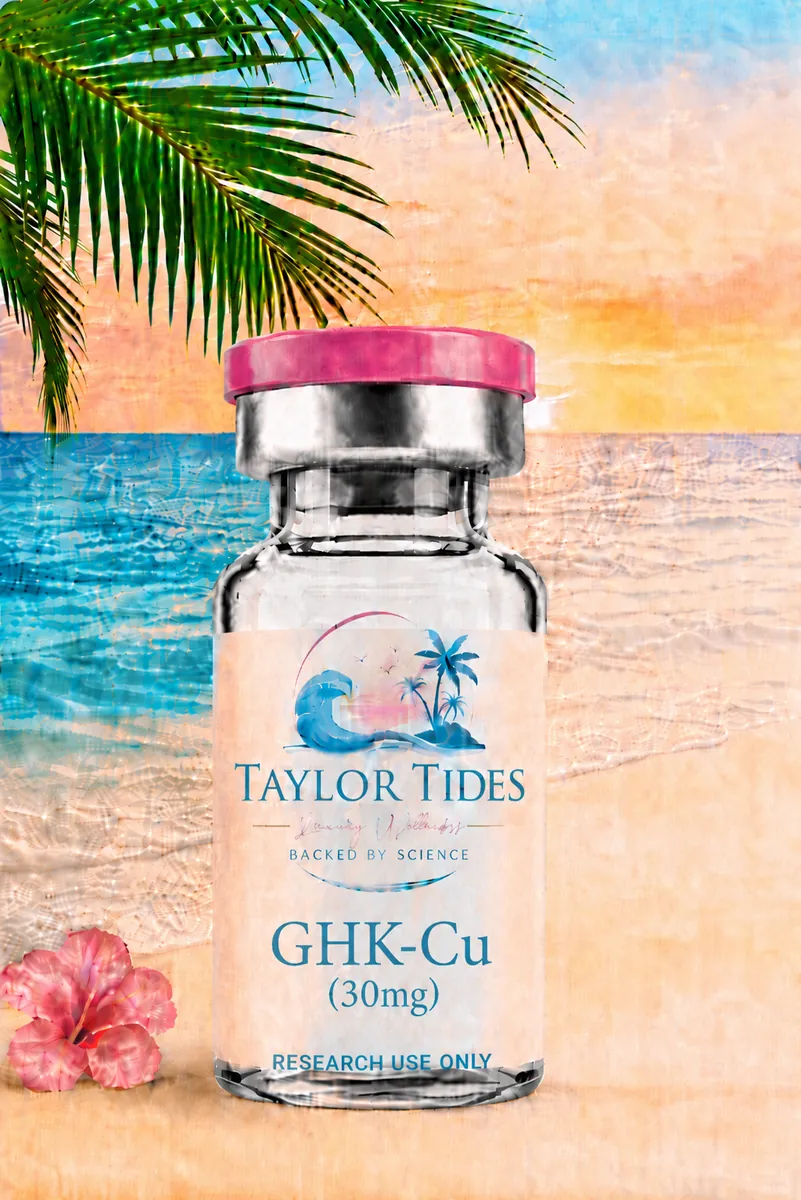
The GHK-Cu peptide is a tiny copper-carrying substance found naturally in the human body. People are researching its possible relationship to skin appearance, hair growth, wound repair and recovery. However, the evidence depends greatly on the specific claim and how GHK-Cu is used.
GHK-Cu appears in topical creams and serums, as well as compounded injectable products and products labeled for research use. These forms are not interchangeable. Most human research has involved topical products, while reliable evidence about GHK-Cu injections remains very limited.
This page explains what GHK-Cu is, what researchers have actually studied, the differences between topical and injectable products, possible side effects and what remains unknown.
GHK-Cu in 30 Seconds
- What is it? A tiny peptide made from three connected amino acids that holds copper.
- Why are people researching it? Most interest involves skin, wrinkles, hair, wound repair and recovery.
- Does it work? Laboratory research is promising, but strong human evidence remains limited.
- Which form has been studied more? Topical GHK-Cu has more human research than injectable GHK-Cu.
- Is it an approved injectable treatment? GHK-Cu injections have not been established as an FDA-approved treatment for skin, hair, aging or general recovery.
- What remains unknown? The benefits and long-term safety of repeated GHK-Cu injections have not been established through large, well-controlled human studies.
What Is the GHK-Cu Peptide?
GHK-Cu is a tiny copper-carrying substance that the body produces naturally.
The GHK part is a peptide made from three connected amino acids. Amino acids are small pieces that the body uses individually and combines to form peptides and proteins.
Because GHK contains only three amino acids, scientists call it a tripeptide. The prefix “tri” simply means three.
The Cu part means copper. Cu is the scientific symbol for copper on the periodic table.
When GHK holds copper, the combination is called GHK-Cu:
GHK is the small carrier. Copper is what it carries.
This does not make GHK-Cu an ordinary copper supplement. Its structure may influence how copper travels and participates in certain processes in the body. PubChem identifies the GHK-Cu peptide as copper tripeptide, also known as GHK-Cu copper peptide.
Are GHK, GHK-Cu and Copper Peptides the Same Thing?
Not exactly.
- GHK is the three-amino-acid peptide without copper.
- GHK-Cu is GHK holding copper.
- Copper peptide is a broader name for a peptide connected to copper.
- Copper tripeptide-1 is a cosmetic ingredient name frequently used for GHK-Cu in skincare products.
These names are often treated as interchangeable in product descriptions and online conversations. However, finished products can be very different.
A facial serum containing copper tripeptide-1 is not automatically equivalent to a vial labeled GHK-Cu. The concentration, formulation, manufacturing quality, purity, sterility and intended use may be different.
Why Is GHK-Cu Being Researched?
Interest in GHK-Cu focuses mainly on skin appearance and wrinkles, hair growth or hair loss, wound and tissue repair, and recovery from injuries.
Laboratory research suggests that GHK-Cu may influence collagen, inflammation, blood-vessel formation and tissue repair.
Collagen is a strong structural protein that helps support the skin, tendons and other tissues. You can think of it as part of the support that helps tissues maintain their shape and strength.
Interesting results in cells and animals make GHK-Cu worth studying. They do not prove that a cream or injection will produce the same results in people.
What Does Human Research Actually Show?
Human evidence is much smaller than the attention GHK-Cu receives online might suggest.
A 2026 systematic review identified 20 relevant studies involving GHK-Cu in aesthetic medicine. Eighteen were preclinical studies conducted in laboratories or with nonhuman models. Only two were randomized human trials.
The review found a reasonable scientific basis for continued research, especially into processes related to skin and tissue. It also concluded that larger human studies using standardized products and delivery methods are needed.
- Possible explanation: Scientists can explain how GHK-Cu might produce an effect.
- Human evidence: Researchers have tested whether that effect actually occurs in people.
- Proven treatment: Strong, repeatable evidence shows meaningful benefits that outweigh the risks for a defined use.
GHK-Cu has interesting biology and some human research. That does not provide strong proof for every skin, hair, recovery or aging claim found online.
GHK-Cu for Skin and Wrinkles
GHK-Cu is promoted as an anti-aging skincare ingredient because some laboratory studies suggest that it may influence collagen and other processes involved in maintaining skin.
Human results are less clear.
In one small randomized study, 13 people used skincare products with or without GHK-Cu after laser skin resurfacing. Researchers found no important objective differences in redness, wrinkles or overall skin quality. People who used GHK-Cu reported greater satisfaction with their skin, but personal satisfaction and measurable physical improvement are different results.
Other studies have reported improvements in wrinkles or skin condition. However, they used different products, concentrations and delivery systems. Some combined GHK-Cu with other active ingredients, making it difficult to determine what produced the result.
Topical GHK-Cu has some encouraging research behind it, but the evidence does not support every anti-aging claim found online.
Does GHK-Cu Help Hair Growth?
GHK-Cu is also promoted for scalp health, thicker-looking hair and hair growth.
Laboratory research offers possible explanations for how it might affect hair follicles and nearby tissues. Reliable human evidence has not established that a GHK-Cu serum or injection consistently regrows hair.
- Does it work for the specific cause of the hair loss?
- Can enough topical GHK-Cu reach the appropriate part of the skin?
- Which concentration and formulation were studied?
- How does it compare with established hair-loss treatments?
- Does any improvement continue after the product is stopped?
Hair loss can have hormonal, genetic, nutritional, autoimmune, medication-related or other causes. A copper peptide product cannot identify or correct every possible cause.
GHK-Cu remains an interesting research subject, but it is not a proven replacement for properly evaluating unexplained or continuing hair loss.
Topical GHK-Cu vs Injectable GHK-Cu
Topical and injectable GHK-Cu deliver the substance in very different ways.
| Form | What it means | Why people research it | Important limitation |
|---|---|---|---|
| Topical | Applied as a serum, cream or similar product | Skin appearance, wrinkles, scars and hair | The skin may prevent much of the ingredient from reaching deeper tissues |
| Injectable | Administered through an injection | Skin, recovery, wound repair and whole-body effects | Reliable human evidence about benefits, dosage and long-term safety is very limited |
Research involving topical products does not prove that injections work. Claims about injectable products also cannot automatically be applied to a cosmetic serum.
The delivery method changes how much GHK-Cu may enter the body, which tissues it can reach, which side effects are possible and whether sterility is required. Therefore, a topical cosmetic and an injectable product must be evaluated separately.
What Can Before-and-After Photographs Prove?
Before-and-after photographs can show that someone looked different in two images. They cannot establish the cause.
Lighting, camera position, facial expression, makeup, skin moisture, hairstyle, other treatments and the passage of time can all affect the result.
Even an honest photograph cannot separate the effect of GHK-Cu from everything else that changed. More reliable research uses consistent photography, comparison groups, measurements defined in advance and researchers who do not know which product each participant received.
Before-and-after photographs can generate useful questions. They do not prove that GHK-Cu caused the change or that another person should expect the same result.
GHK-Cu Side Effects and Safety Questions
Possible side effects depend on the product and how it is used.
Topical products may cause redness, itching, burning or stinging, dryness, rash or other irritation.
Forum conversations also include reports of acne breakouts and unwanted changes in skin appearance. These reports identify concerns worth investigating. They cannot show how often an effect occurs or prove that GHK-Cu caused it.
Injectable products add concerns involving:
- Pain, burning, redness or swelling at the injection site
- Infection from a contaminated or nonsterile product
- Incorrect concentration
- Peptide impurities or breakdown products
- Immune reactions
- Unknown effects from repeated or long-term use
The FDA has stated that compounded injectable GHK-Cu may present risks involving peptide aggregation, impurities and immune reactions. Aggregation means the peptide material may form groups or clumps. Those clumps may behave differently from the intended product and could provoke an unwanted immune response.
Reliable human information about the long-term safety of injectable GHK-Cu remains limited.
Is There a Proven GHK-Cu Dosage?
Searches for GHK-Cu dosages and injection charts are frequent, but the popularity of a search does not create a medically established dose.
A meaningful dose must be connected to a specific purpose, defined product, delivery method, studied population and human safety evidence.
GHK-Cu injections do not have a universal, established, evidence-based dose for improving skin, promoting hair growth, combating aging or supporting general recovery. Charts shared by vendors, social-media accounts or forum participants may describe what someone sells or personally uses. They do not establish what is safe or effective for another person.
For that reason, this page does not provide injection protocols, reconstitution instructions or dosage charts.
What Do 30 mg, 50 mg and 100 mg Mean?
The abbreviation mg means milligrams, a unit used to measure weight.
A vial labeled 30 mg, 50 mg or 100 mg states how much GHK-Cu it is supposed to contain. The number does not prove identity, concentration accuracy, purity, sterility, proper storage, safety or effectiveness.
A larger milligram number means the label claims the vial contains more material. It does not mean the product has been tested more thoroughly or is more appropriate for human use.
What Is a GHK-Cu or GLOW Blend?
GHK-Cu sometimes appears in products marketed as GLOW blends. These blends may combine GHK-Cu with other peptides, frequently BPC-157 and TB-500.
“GLOW” is a marketing nickname, not a standardized scientific formula. Different sellers may use the name for products containing different ingredients or amounts.
Combining substances creates additional uncertainty. It becomes more difficult to identify what produced a benefit or side effect, and research involving each ingredient separately does not prove that the mixture is safe or more effective.
The exact ingredient list and amount of each substance matter more than the name printed on the vial.
FDA and Compounding Status
GHK-Cu appears in some cosmetic products, but a cosmetic ingredient and an approved injectable medicine are not the same thing.
The FDA has identified concerns involving compounded injectable GHK-Cu, including limited human safety information and possible risks from impurities, aggregation and unwanted immune responses.
The federal classification related to compounding has changed as nominations have been submitted, withdrawn and clarified. These administrative changes do not establish that GHK-Cu injections are FDA-approved or proven safe and effective.
- Cosmetic ingredients do not automatically qualify as approved drug treatments.
- Compounded products are not individually approved by the FDA.
- Research-use vials are not automatically appropriate for administration to people.
- Labels do not prove identity, purity, sterility, safety or effectiveness.
Questions to Ask When Evaluating a GHK-Cu Product
- What exactly does it contain?
- How much GHK-Cu does it contain?
- Who manufactured and tested it?
- What evidence supports the advertised benefit?
- Does that evidence involve this formulation and delivery method?
- Which side effects and evidence gaps are explained?
An injectable product also raises questions about identity testing, concentration, sterility, endotoxins, storage and professional oversight.
A Certificate of Analysis, frequently shortened to COA, may contain useful laboratory results. It does not automatically prove that a product is sterile, safe, effective or medically appropriate.
Frequently Asked Questions About GHK-Cu
What is GHK-Cu?
GHK-Cu is a three-amino-acid peptide connected to copper. The body produces it naturally, and researchers are studying its possible role in skin maintenance, tissue repair and other related processes.
Is GHK-Cu the same as a copper peptide?
GHK-Cu is one type of copper peptide. It may appear as copper tripeptide-1 in cosmetic ingredient lists.
What does GHK-Cu do?
Laboratory research suggests that GHK-Cu may influence collagen, inflammation and tissue-repair processes. Human evidence is more limited and does not prove every benefit promoted online.
Does GHK-Cu help with wrinkles?
Some research involving topical products is encouraging, but the results are mixed and the studies remain limited. The product’s formulation and other ingredients may also affect the result.
Does GHK-Cu regrow hair?
GHK-Cu has possible biological connections to hair-follicle activity, but reliable human evidence has not established that it consistently regrows hair or treats every cause of hair loss.
Is topical GHK-Cu better than injectable GHK-Cu?
They should not be compared as though they are the same product. Topical GHK-Cu has more human skin research. Injectable GHK-Cu has less reliable human evidence and presents additional safety and quality concerns.
What are the side effects of GHK-Cu?
Topical products may cause redness, itching, burning, dryness or irritation. Injectable products add risks involving injection-site reactions, infection, product quality and possible immune responses. The long-term safety of injections remains uncertain.
Is there an established dosage for GHK-Cu injections?
No universal, established, evidence-based dose has been demonstrated for skin, hair, aging or general recovery. Online dosage charts should not be confused with clinical evidence.
Is GHK-Cu FDA-approved?
GHK-Cu may appear in cosmetic products, but that does not make GHK-Cu injections an FDA-approved treatment. Compounded products are also not individually approved by the FDA.
The Bottom Line
GHK-Cu is a small copper-carrying peptide found naturally in the body. Laboratory research offers reasonable explanations for its possible role in skin maintenance, hair-follicle activity and tissue repair.
Human evidence is much smaller than the online conversation. Topical products have received more study than injections, but even their results depend on the formulation, delivery method and claim being evaluated.
Injectable GHK-Cu adds unresolved questions about effectiveness, dosage, impurities, sterility, immune reactions and long-term safety. A larger vial, an attractive photograph or a detailed online protocol does not answer those questions.
The clearest way to evaluate the evidence is to separate what the body produces naturally, what laboratory research suggests, what human studies have observed and what sellers or online communities claim about the GHK-Cu peptide.
This page provides educational information about GHK-Cu, copper peptides, topical products and research involving injectable products. It does not provide medical advice, diagnosis, treatment recommendations, injection instructions, reconstitution instructions or dosage protocols.
Questions about continuing hair loss, skin conditions, wounds, injectable products or possible adverse reactions should be discussed with an appropriately qualified and licensed healthcare professional.
Sources and Further Reading
- Copper Tripeptide, PubChem
- The Regenerative Potential of GHK-Cu in Aesthetic Medicine, PubMed
- Effects of Topical Copper Tripeptide Complex on CO2 Laser-Resurfaced Skin, PubMed
- Review of GHK-Cu Skin Permeation and Liposomal Delivery, PubMed Central
- Topically Applied GHK as an Anti-Wrinkle Peptide, PubMed Central
- Potential Safety Risks of Certain Substances Used in Compounding, FDA
- Current 503A Bulk-Substance Nomination Categories, FDA
Author: TaylorTides. Medical review status: Not reviewed by a licensed clinician. Research reviewed: August 30, 2026.