
Molecule Library
NAD+ Injections: What NAD+ Is, What the Research Shows and What Remains Unknown
Helpful information about NAD+, human research, possible benefits, side effects, FDA warnings and unanswered questions.
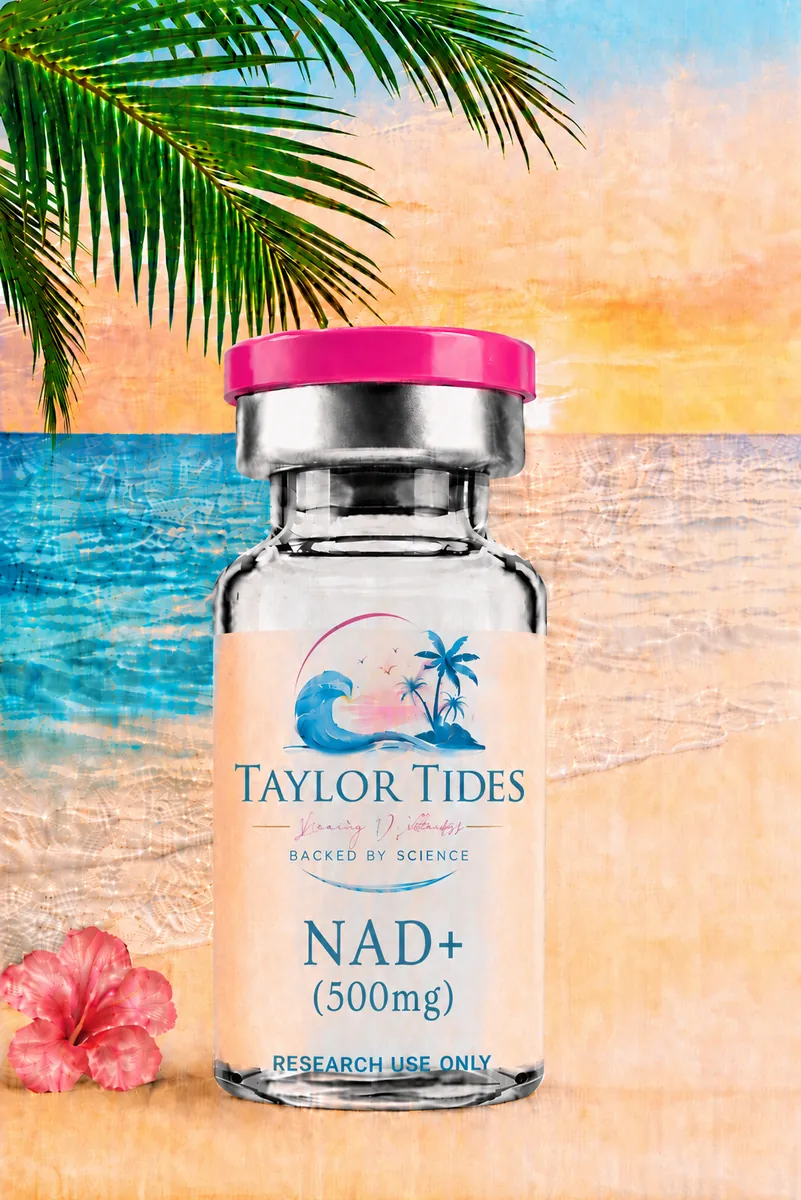
NAD+ injections contain a manufactured form of a molecule the body already produces. Natural NAD+ helps cells process energy and perform other essential functions.
That does not mean injecting more NAD+ has been proven to increase energy, slow aging or treat disease. NAD+ is necessary for life, but the benefits of NAD+ injections and intravenous infusions remain uncertain.
NAD+ is also not a peptide. It is often sold alongside peptides and discussed in communities that talk about peptides, which has created understandable confusion about what it actually is.
This information explains what NAD+ does naturally, what is being injected and what human research has found about its benefits, side effects and safety.
NAD+ in 30 Seconds
- NAD+ is a small helper molecule found throughout the body.
- It helps cells process energy from carbohydrates, fats and proteins.
- It also supports cell functions such as maintaining DNA, the body's biological instruction code.
- NAD+ is a coenzyme, not a peptide, protein, hormone or vitamin.
- The body uses vitamin B3 and other starting materials to make NAD+.
- NAD+ injections, intravenous infusions and supplements are different products.
- Current human evidence does not show that NAD+ injections reverse aging or reliably increase energy in generally healthy people.
What Is NAD+?
The body breaks down food and converts its stored energy into a form cells can use. Cells are the tiny living units that make up the body.
NAD+ helps move that energy through a series of small chemical changes. One simple way to picture it is as a reusable carrier:
- NAD+ starts ready to collect electrons, which are tiny electrically charged particles.
- After collecting them, it becomes NADH.
- NADH carries the electrons to another part of the process.
- It releases them and changes back into NAD+.
The body repeats this cycle continuously.
Food supplies the original energy. NAD+ helps move that energy through the process. ATP is the usable form of energy cells produce at the end.
This is why NAD+ is connected to cellular energy, but calling it “cell fuel” can be misleading. NAD+ is not food, a stimulant or an instant source of energy.
What Does NAD+ Stand For?
NAD stands for nicotinamide adenine dinucleotide.
The long name describes the chemical parts that form the molecule. You do not need to memorize it to understand what NAD+ does.
The plus sign is part of the chemical name. It does not mean extra strength or an upgraded wellness product. It identifies the form that is ready to accept electrons.
Is NAD+ a Peptide?
No. A peptide is a chain of amino acids. NAD+ has a different structure and is not made from an amino-acid chain.
It appears in peptide conversations because many of the same clinics and suppliers offer NAD+ alongside BPC-157, TB-500, MOTS-C, SS-31 and other compounds.
That commercial grouping does not make NAD+ a peptide.
Is NAD+ a Vitamin?
NAD+ is not a vitamin, but the body uses materials related to vitamin B3 to make it.
These materials include niacin, nicotinamide, nicotinamide riboside or NR, nicotinamide mononucleotide or NMN, and tryptophan.
NR and NMN are called precursors. A precursor is a starting material the body can use to make something else. This means an NR or NMN supplement is not the same as an NAD+ injection.
What Are NAD+ Injections and Intravenous Infusions?
NAD+ injections contain a manufactured form of nicotinamide adenine dinucleotide. Depending on the product and setting, it may be injected under the skin, into a muscle or directly into a vein.
An intravenous infusion delivers NAD+ into a vein over time. Its amount, speed and duration may differ from a smaller injection.
NAD+ performs much of its important work inside cells. Putting it into blood or tissue does not show how much of the complete molecule reaches the intended cells or what effect it produces after arriving.
The body may break down, transform, remove or reuse parts of administered NAD+. Scientists are still studying what happens after direct administration and whether it produces meaningful health benefits.
Do NAD+ Injections Work?
It depends on what “work” means.
NAD+ performing essential functions inside the body is established biology. Injecting extra NAD+ to produce a health benefit is a different question.
What Is Established?
- The body needs NAD+ for cells to function normally.
- NAD+ helps cells process energy.
- It helps certain enzymes. Enzymes are specialized molecules that help changes happen inside the body.
- The body continually makes, uses and recycles NAD+.
What Has Human Research Shown?
Most human research has studied NR and NMN rather than direct NAD+ injections. These precursors can raise certain NAD+-related measurements, but results involving energy, metabolism, inflammation, exercise and other effects have been mixed or limited to specific groups.
Direct NAD+ infusion has been studied much less rigorously.
A small 2019 study examined how infused NAD+ was processed in blood and urine. It was not designed to prove increased energy, anti-aging effects or disease treatment.
A small 2026 review of existing commercial infusion records found that some people receiving NAD+ reported digestive discomfort, a faster heart rate and chest pressure during treatment. Laboratory changes were inconsistent, and the study did not establish general wellness or anti-aging benefits.
Larger, better-controlled human studies are still needed.
What About Claims Concerning Energy, Aging, Brain Health and Addiction?
Clinics and sellers promote NAD+ products for increasing energy, improving mental clarity, speeding recovery, reducing fatigue, supporting healthy aging, and helping with addiction or withdrawal. These proposed uses do not have the same level of evidence.
Energy and Fatigue
NAD+ is essential for normal energy processing. Human evidence does not show that injections reliably make generally healthy people feel more energetic.
Persistent fatigue can have many causes. Using NAD+ without investigating the underlying problem could delay appropriate care.
Aging
Researchers have found age-related changes in NAD+ metabolism, but measurements differ among tissues, age groups and health conditions.
This research does not show that all older adults have a treatable NAD+ deficiency. It also does not establish that NAD+ injections reverse aging, prevent age-related disease or extend human life.
Brain Health
NAD+ is important to normal brain and nerve-cell function. Scientists study NAD+-related pathways in neurological diseases, but that does not prove injections improve memory or prevent dementia.
Addiction and Withdrawal
The evidence is not strong enough to establish NAD+ infusion as a proven treatment for addiction or withdrawal.
Withdrawal from alcohol, benzodiazepines and some other substances can be medically dangerous and may require supervised care.
What Are the Possible Side Effects?
Reported effects of NAD+ injections and intravenous infusions include:
- Injection-site pain or burning
- Nausea or vomiting
- Abdominal discomfort or diarrhea
- Headache
- Flushing or warmth
- Muscle tightness or cramping
- Dizziness
- Increased heart rate
- Chest pressure
- Chills or shaking
- Fatigue
A reaction does not always prove that NAD+ was the cause. Ingredients, concentration, sterility, contamination, delivery method and other substances used may also matter.
Serious symptoms such as chest pain, trouble breathing, fainting, weakness on one side of the body or signs of a severe allergic reaction require immediate medical attention.
What Has the FDA Warned About?
The FDA has warned drug compounders about using food-grade NAD+ ingredients to make sterile injectable products.
Food grade means an ingredient is suitable for use in food. It does not establish that the ingredient is appropriate for injection.
The FDA received adverse-event reports connected with compounded NAD+ injectable drugs. Reported reactions included severe chills, shaking, vomiting and fatigue. Some people required medical treatment.
The agency said the reactions were consistent with excessive endotoxin exposure. Endotoxins are harmful materials associated with certain bacteria.
This is why different kinds of testing matter:
- Identity: Is the substance actually NAD+?
- Potency: How much NAD+ does it contain?
- Purity: Are unwanted chemicals or materials present?
- Sterility: Are living microorganisms present?
- Endotoxins: Are harmful bacterial materials present?
- Effectiveness: Does the product produce the claimed health benefit?
Passing one test does not prove that the others were passed.
A report showing that a vial contains NAD+ does not prove it is sterile, free of endotoxins, medically appropriate or effective.
Are NAD+ Injections FDA-Approved?
NAD+ injections and intravenous infusions marketed for general wellness, energy or anti-aging are not FDA-approved treatments for those purposes.
Some products are prepared by compounding pharmacies. A compounded drug is prepared for a particular need or setting. It is not reviewed and approved by the FDA as a finished drug.
Compounding can have a legitimate medical role, but phrases such as “pharmaceutical grade,” “medical grade,” “research grade” or “third-party tested” do not answer every quality and safety question.
What About Combining NAD+ With MOTS-C or SS-31?
Online, NAD+ is often combined with MOTS-C, SS-31, glutathione, hormones, peptides and other substances. Such a combination is sometimes called a stack.
Using several compounds at the same time makes it difficult to identify which one produced a benefit or an unwanted reaction. Research on NAD+ alone also cannot establish that a particular combination is safe or effective.
Taylor Tides does not provide instructions for combinations, cycles, injections or dosing.
Questions to Ask About an NAD+ Product
- Does the product contain NAD+, NADH, NR, NMN or another substance?
- Is it an oral supplement, injection or intravenous infusion?
- What specific benefit is proposed?
- Has that product and delivery method been studied in humans for that purpose?
- Is it a compounded product?
- Was the finished injectable product tested for identity, potency, sterility and endotoxins?
- What unwanted effects have been reported?
- Who will supervise the treatment and respond if a serious reaction occurs?
Frequently Asked Questions
Is NAD+ a peptide?
No. NAD+ is a coenzyme that helps certain enzymes perform their work. A peptide is a chain of amino acids.
What is the difference between NAD+ and NADH?
NAD+ is ready to accept electrons. After accepting them, it becomes NADH. They are two forms of the same working system.
Is NAD+ the same as NMN or NR?
No. NMN and NR are starting materials the body can use to produce NAD+.
Do NAD+ injections increase energy?
NAD+ is essential for normal energy processing inside cells. Current human evidence does not establish that injections reliably increase daily energy in generally healthy people.
Can NAD+ reverse aging?
Human evidence does not show that NAD+ injections reverse aging, make someone biologically younger or extend life.
Are NAD+ injections FDA-approved?
NAD+ injections and infusions marketed for wellness, energy or anti-aging are not FDA-approved treatments for those purposes.
Conclusion
NAD+ is a natural helper molecule cells need to process energy and perform other essential functions. It is a coenzyme, not a peptide, vitamin, hormone or stimulant.
That natural role does not prove that giving extra NAD+ through an injection, intravenous infusion or supplement will increase energy, slow aging or treat a medical condition.
The useful questions are whether a specific product is made properly, administered safely and supported by meaningful human evidence for its proposed purpose.
These differences matter when evaluating NAD+ injections.
This information is provided for general educational purposes only. It does not diagnose a medical condition, recommend a product or replace advice from a qualified healthcare professional.
Taylor Tides does not provide instructions for NAD+ dosing, injections, infusions, reconstitution, cycles or combinations.
Sources and Further Reading
- NIH Office of Dietary Supplements: Niacin Fact Sheet for Health Professionals
- FDA: Use Ingredients Suitable for Sterile Compounding
- Safety and effectiveness of NAD in different clinical conditions
- Human NAD+ metabolism during a six-hour intravenous infusion
- Pilot tolerability study of intravenous NAD+ versus nicotinamide riboside
- What is really known about nicotinamide riboside supplementation?
- Roles of NAD+ in health and aging
Author: TaylorTides. Medical review status: Not reviewed by a licensed clinician. Research reviewed: August 30, 2026.