
Molecule Library
Survodutide (Survo): What It Is, Research and Safety
Helpful information about survodutide, how it works, what clinical trials found about weight and liver fat, side effects and FDA status.
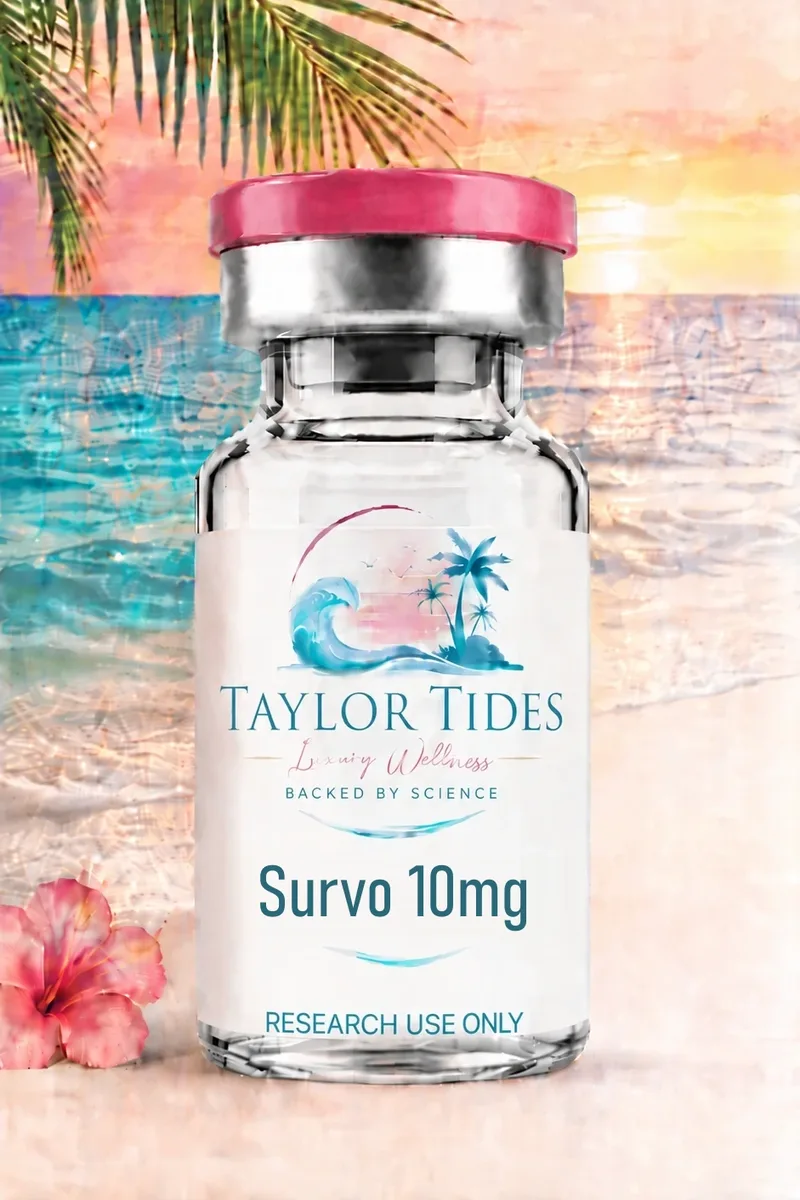
Survodutide, often shortened to Survo, is an investigational once-weekly injectable peptide studied for obesity, type 2 diabetes and fatty liver disease. It was developed by Boehringer Ingelheim in partnership with Zealand Pharma.
Large phase 3 trials published in 2026 found that survodutide led to more weight loss than placebo. Digestive side effects were common, and survodutide has not been approved by the FDA or any other regulator.
This page explains what survodutide is, how it works, what the trials found, what remains unknown and how research products differ from the medicine studied in clinical trials.
Survo in 30 Seconds
- Survo is a nickname for survodutide, also known as BI 456906.
- It activates two receptors: glucagon and GLP-1.
- In a 76-week phase 3 trial of adults with obesity without diabetes, average weight loss was 12.2% to 13.0%, compared with 5.4% with placebo.
- Nausea, vomiting, diarrhea and constipation were the most common side effects.
- It is also being studied for MASH, a serious form of fatty liver disease.
- Survodutide is investigational and not FDA approved.
What Is Survodutide?
Survodutide is a laboratory-made peptide, a chain of amino acids designed to act like natural hormones. It is given as an injection under the skin once a week in clinical trials.
Survodutide belongs to a newer group of medicines that act on more than one hormone receptor. Researchers hope this approach may help with weight and metabolic health in ways that a single-receptor medicine may not.
Are Survo and Survodutide the Same?
Survo is an informal nickname used online and by sellers. Survodutide is the official name of the medicine studied in clinical trials. A product labeled "Survo" is not automatically the same as the survodutide made by Boehringer Ingelheim for its trials.
How Does Survodutide Work?
Survodutide is called a dual agonist. An agonist is a substance that activates a receptor, like a key turning a lock. Survodutide activates two receptors:
- The GLP-1 receptor. GLP-1 is a natural gut hormone that helps people feel full, slows how quickly the stomach empties and helps regulate blood sugar. Medicines such as semaglutide act on this receptor.
- The glucagon receptor. Glucagon is a natural hormone that signals the liver to release stored energy. Researchers are studying whether activating this receptor may increase energy use and help reduce fat stored in the liver.
In plain language: one part of survodutide is aimed at appetite and blood sugar, and the other part is aimed at how the body, especially the liver, uses energy.
What Have the Clinical Trials Found?
Survodutide's main research program is called SYNCHRONIZE. These are large, double-blind, placebo-controlled trials, meaning neither participants nor researchers knew who received survodutide and who received a placebo.
SYNCHRONIZE-1: Obesity Without Diabetes
This trial included 725 adults with obesity, or overweight plus at least one weight-related health problem, who did not have diabetes. Participants received weekly survodutide or placebo for 76 weeks, along with lifestyle counseling.
Using the trial's main analysis, which counts everyone including people who stopped treatment, average weight loss was:
- 12.2% with the lower survodutide dose
- 13.0% with the higher survodutide dose
- 5.4% with placebo
A separate analysis of people who stayed on treatment reported average weight loss of up to 16.6%. The results were published in the New England Journal of Medicine in 2026.
SYNCHRONIZE-2: Obesity With Type 2 Diabetes
This trial included 752 adults with type 2 diabetes and excess weight. After 76 weeks, average weight loss was 8.2% to 9.8% with survodutide compared with 3.9% with placebo. Blood sugar levels, measured by HbA1c, also improved more with survodutide. These results were published in October 2026.
How Should These Results Be Interpreted?
- The trials were large and well designed, which makes the results more reliable than small studies.
- The trials were funded by Boehringer Ingelheim, the company developing survodutide.
- Weight loss varied between individuals, and averages do not predict any one person's result.
- Participants received a carefully manufactured medicine under medical supervision.
- Long-term effects beyond the trial periods are still being studied.
Survodutide and Fatty Liver Disease
MASH, short for metabolic dysfunction-associated steatohepatitis, is a form of fatty liver disease in which fat buildup causes inflammation and can lead to scarring, called fibrosis.
In a 48-week phase 2 trial published in 2024, 293 adults with MASH and liver scarring received survodutide or placebo. Improvement in MASH without worsening of scarring occurred in 43% to 62% of participants receiving survodutide, depending on the dose, compared with 14% receiving placebo.
A 2026 phase 3 trial called SYNCHRONIZE-MASLD also reported reductions in liver fat. Larger phase 3 trials in people with MASH, including the LIVERAGE trial, are still in progress. Survodutide is not an approved treatment for any liver disease.
Survodutide Side Effects and Safety
Digestive side effects were the most common problems in clinical trials. They included nausea, vomiting, diarrhea and constipation, and were usually described as mild to moderate.
- In SYNCHRONIZE-1, digestive side effects occurred in 80.9% to 89.7% of participants receiving survodutide, compared with 47.9% receiving placebo.
- About 18% to 20% of participants receiving survodutide stopped treatment because of digestive side effects, compared with about 3% receiving placebo.
- In the 2024 liver trial, nausea occurred in 66% of participants receiving survodutide and 23% receiving placebo.
These rates of stopping treatment were higher than many people expected and have been an important topic of discussion about survodutide.
Questions about long-term safety, use during pregnancy or breastfeeding, interactions with other medications and effects in people with certain health conditions are still being studied. Safety findings from carefully manufactured trial medicine do not apply to products of unknown quality.
How Is Survodutide Different From Other GLP-1 Medicines?
| Question | Survodutide | Tirzepatide | Retatrutide |
|---|---|---|---|
| Receptors activated | Glucagon and GLP-1 | GIP and GLP-1 | GIP, GLP-1 and glucagon |
| Given | Once weekly injection in trials | Once weekly injection | Once weekly injection in trials |
| FDA approved | No | Yes, as Mounjaro and Zepbound | No |
Trials of different medicines enrolled different people and used different designs, so their weight-loss results cannot be compared directly. A medicine acting on more receptors is not automatically more effective or safer.
Learn more about tirzepatide and retatrutide.
Is Survodutide FDA Approved?
No. As of October 2026, survodutide is an investigational medicine. It has not been approved by the FDA or any other regulatory authority for obesity, diabetes, liver disease or any other use.
Positive trial results are an important step, but approval requires a separate regulatory review of safety, effectiveness and manufacturing quality.
What Does "Research Use Only" Mean?
"Research use only" means a product is sold for laboratory or other nonclinical research, not as an approved medicine for people.
The label does not prove that a vial contains authentic survodutide, has the amount shown on the label, is sterile, is free from contamination or is safe to inject. Products sold online as "Survo" are not the medicine used in Boehringer Ingelheim's clinical trials and have not been reviewed by the FDA.
Frequently Asked Questions About Survodutide
What is Survo?
Survo is a common nickname for survodutide, an investigational once-weekly injectable peptide developed by Boehringer Ingelheim. It is also known by its development code, BI 456906.
How does survodutide work?
Survodutide activates two hormone receptors: the GLP-1 receptor, which affects appetite and blood sugar, and the glucagon receptor, which affects how the liver uses energy and stores fat.
How much weight did people lose on survodutide?
In the 76-week SYNCHRONIZE-1 trial of adults with obesity without diabetes, average weight loss was 12.2% to 13.0% with survodutide compared with 5.4% with placebo, using the trial's main analysis. Results vary between individuals.
Is survodutide FDA approved?
No. As of October 2026, survodutide is an investigational medicine and has not been approved by the FDA or any other regulatory authority.
What are the side effects of survodutide?
Digestive side effects such as nausea, vomiting, diarrhea and constipation were the most common in clinical trials. In the phase 3 obesity trials, roughly 18% to 20% of participants receiving survodutide stopped treatment because of digestive side effects.
Is survodutide the same as semaglutide or tirzepatide?
No. Semaglutide acts on the GLP-1 receptor, and tirzepatide acts on the GIP and GLP-1 receptors. Survodutide acts on the glucagon and GLP-1 receptors. They are different molecules with different research histories.
Is survodutide being studied for fatty liver disease?
Yes. A 2024 phase 2 trial in people with MASH, a form of fatty liver disease with inflammation, reported improvement in more participants receiving survodutide than placebo. Larger phase 3 liver trials are ongoing.
The Bottom Line
Survodutide, often called Survo, is an investigational peptide that activates both the glucagon and GLP-1 receptors.
Large 2026 trials showed meaningful weight loss compared with placebo, and earlier research found improvements in fatty liver disease. Digestive side effects were common and led many participants to stop treatment.
Survodutide is not FDA approved. It is a promising medicine still under study, not an established treatment.
This information is provided for general educational purposes only. It is not medical advice and does not diagnose, treat, cure or prevent obesity, diabetes, liver disease or another medical condition.
Taylor Tides does not provide survodutide dosing, reconstitution, injection, switching or combination instructions.
Anyone considering a weight-loss or diabetes medicine should speak with a qualified healthcare professional. Do not stop or change a prescription medication without medical guidance.
Sources and Further Reading
- Survodutide once weekly for the treatment of adults with obesity (SYNCHRONIZE-1, NEJM 2026)
- Survodutide once weekly in adults with obesity and type 2 diabetes (SYNCHRONIZE-2, NEJM 2026)
- A phase 2 randomized trial of survodutide in MASH and fibrosis (NEJM 2024)
- Survodutide in adults with obesity and MASLD: SYNCHRONIZE-MASLD (Nature Medicine 2026)
- ClinicalTrials.gov: SYNCHRONIZE-1
- ClinicalTrials.gov: LIVERAGE trial in MASH
Author: TaylorTides. Medical review status: Not reviewed by a licensed clinician. Research reviewed: October 7, 2026.