
Molecule Library
Retatrutide Peptide: What Is “Reta” and How Does It Work?
A plain-language guide to reta, its three-part action, clinical research, side effects, and current FDA status.
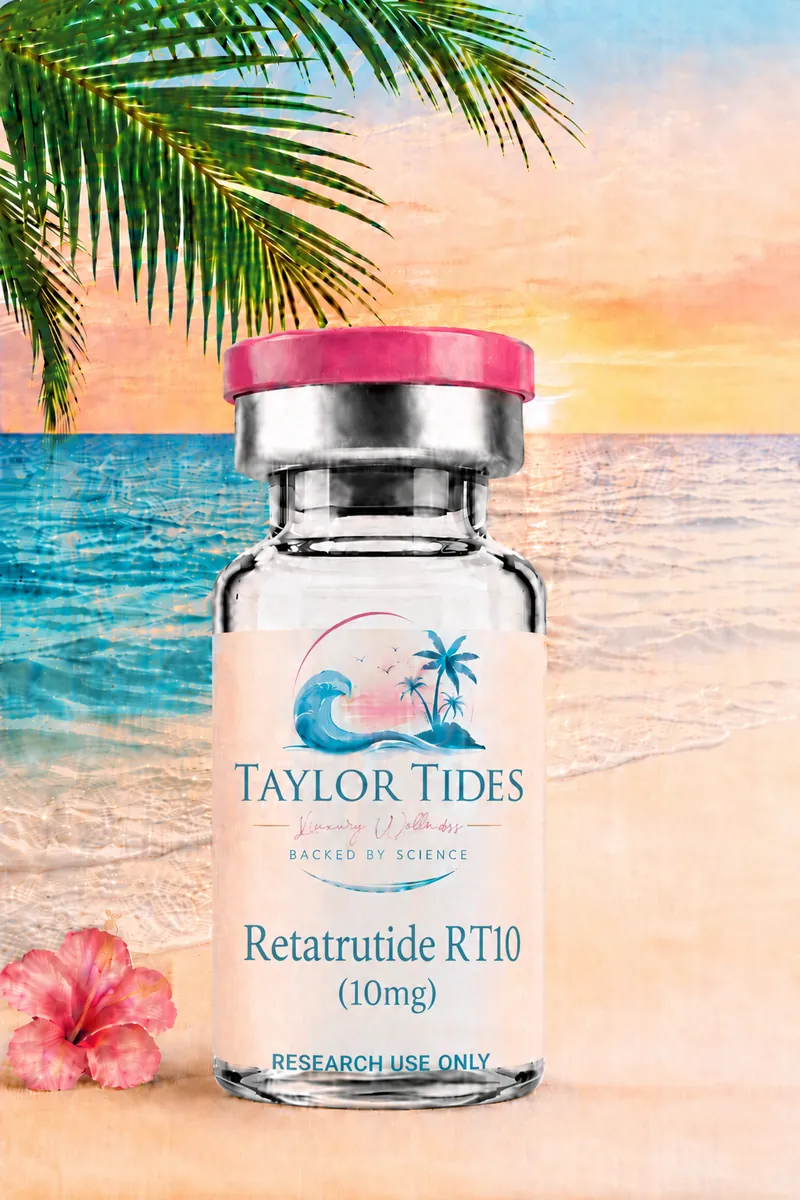
Additional catalog sizes: Retatrutide 15mg, Retatrutide 24mg, Retatrutide 40mg, Retatrutide 64mg.
Retatrutide peptide is an experimental laboratory-made peptide (opens in a new tab). It is being studied as a possible treatment for obesity, type 2 diabetes, and related health problems. Online, people often shorten its name to reta.
The easiest way to picture retatrutide is as one manufactured message designed to activate three different controls in the body. Those controls are involved in hunger, fullness, blood sugar, digestion, and how the body uses energy.
Researchers call these controls receptors. Retatrutide activates three:
- GLP-1
- GIP
- Glucagon
That is why it is known as a triple agonist (opens in a new tab). An agonist is simply something that activates a receptor.
Retatrutide has produced important results in clinical trials, but it is not currently an FDA-approved medicine. The FDA also says that, under current federal law, it cannot be used to prepare compounded drugs. Products already being sold online as “reta” are not the regulated medicine used in clinical trials.
What You Should Know First
- Retatrutide is one peptide, not a mixture of three drugs.
- “Reta” is its most common shortened name.
- “GLP-3” is an unofficial nickname used online.
- Clinical trials have reported substantial average reductions in body weight.
- Study averages cannot predict what will happen to a particular person.
- Retatrutide is not currently FDA approved.
- There is no FDA-approved retatrutide dose, brand, or compounded version.
- Products sold online are not automatically authentic, sterile, or safe.
Are Reta and Retatrutide the Same Thing?
Usually, yes. Reta is the abbreviation people commonly use in forums, videos, and social media posts.
You may also encounter misspellings such as:
- Retatrutride
- Retatruitide
- Retartrutide
- Retatrtide
- Ratatrutide
These searches usually refer to retatrutide.
LY3437943 is the identifier used during the drug’s research and development. Retatrutide does not yet have an FDA-approved brand name.
Is Retatrutide Really “GLP-3”?
Some people call it GLP-3, but that is not its scientific name.
Retatrutide is not the third version of GLP-1. The number three refers to the three different receptor systems it activates.
The correct term is triple hormone receptor agonist, usually shortened to triple agonist.
How Does Retatrutide Work?
The body uses chemical messages to coordinate processes we do not consciously control. These include hunger, digestion, blood sugar, and energy use.
A receptor (opens in a new tab) is like a receiving station waiting for a particular message. Retatrutide was designed so that one molecule can activate three types of receiving stations.
| Receptor | What it helps control |
|---|---|
| GLP-1 | Fullness, food intake, digestion, and the body’s blood-sugar response |
| GIP | The body’s response to food, insulin, and blood sugar |
| Glucagon | The release and use of stored energy |
This table is intentionally simplified. Each receptor has more than one job, and the three systems interact with one another.
GLP-1
GLP-1 (opens in a new tab) stands for glucagon-like peptide-1. It is a natural message the body releases after eating.
It helps the body respond when blood sugar rises, affects how quickly food leaves the stomach, and sends signals connected with fullness and food intake.
Retatrutide is not natural GLP-1. It is manufactured to activate the same type of receptor.
GIP
GIP (opens in a new tab) stands for glucose-dependent insulinotropic polypeptide. It is another message the body releases after eating.
GIP helps the body coordinate its insulin response when glucose is present. Its role in appetite, body weight, and energy storage is complicated, so it should not be reduced to a single job.
Glucagon
Glucagon (opens in a new tab) is a natural hormone that helps the body release stored energy when it is needed.
Researchers are studying whether adding glucagon-receptor activity to the GLP-1 and GIP signals contributes to retatrutide’s effects.
Online, this is often reduced to the claim that “retatrutide burns fat.” That statement is too confident. Studies can measure changes in weight and other outcomes, but they do not prove that every pound lost resulted from a glucagon-driven increase in fat burning.
Does Triple Action Mean It Is Three Times Stronger?
No.
“Triple” means retatrutide activates three receptor systems. It does not mean its effects can be added together like the power of three engines.
It also does not automatically mean retatrutide is three times stronger, safer, or better than another medication.
What matters is what happened in controlled human trials, which people were studied, which side effects occurred, and whether regulators eventually determine that the benefits outweigh the risks.
Why Are Researchers Studying Retatrutide?
Researchers are studying whether retatrutide’s triple action can affect body weight, blood-sugar control, and health problems related to obesity.
Research has included people with conditions such as:
- Obesity or overweight
- Type 2 diabetes
- Obesity and cardiovascular disease
- Knee osteoarthritis related to obesity
- Obstructive sleep apnea
- Metabolic fatty-liver disease
Results from one group do not automatically apply to everyone. For example, results from adults with obesity who did not have diabetes should not be presented as the expected results for someone with diabetes or someone seeking relatively minor weight loss.
What Have the Clinical Trials Found?
There is no single “retatrutide result.” Studies have included different people, doses, treatment periods, and health outcomes.
A published Phase 2 trial included 338 adults with obesity or with overweight plus at least one related health condition. The participants did not have diabetes.
After 48 weeks, average weight changes ranged from approximately 8.7% in the lowest-dose group to 24.2% in the highest-dose group. The placebo group had an average change of approximately 2.1%.
These numbers are averages from groups of study participants. They are not a promise, personal forecast, or weight-loss calculator. Some participants lost more, some lost less, and the study included participation requirements and medical supervision.
The Phase 2 study was funded by Eli Lilly, the company developing retatrutide. That relationship does not invalidate the results, but it is relevant when interpreting the findings.
Lilly has also announced positive preliminary results from Phase 3 studies involving different groups of patients. These preliminary results, known as topline findings, are a company’s initial summary of the most important results. They do not contain all the details found in a complete scientific publication reviewed by other experts.
Positive Phase 3 results are important. Even so, they are not the same as FDA approval.
For a closer look at published results, treatment withdrawals and body-composition findings, read our retatrutide clinical trials article.
How Should I Interpret Retatrutide Research?
You do not need to become a clinical researcher. You only need to identify what kind of information you are reading.
| Type of information | What it means |
|---|---|
| Registered trial | A record showing what researchers planned to study |
| Company announcement | The developer’s summary of selected results |
| Peer-reviewed article | A detailed report evaluated by other experts before publication |
| Personal story | One person’s experience without a controlled comparison |
| Seller’s claim | Marketing that may be intended to produce a sale |
| FDA approval | A regulatory decision about a particular product, use, and patient group |
A company announcement, Reddit post, YouTube video, and FDA decision do not carry the same weight as evidence.
What Do We Still Not Know?
Important questions remain:
- What are its benefits and risks after many years?
- How does it compare directly with already-approved alternatives?
- Which people are most likely to benefit?
- Which people are most likely to experience serious side effects?
- What warnings or medical monitoring would appear on an approved label?
- What would the FDA-approved dose be?
- When will it be approved, or will it be approved at all?
- What would an approved product cost?
- Does a product sold online contain authentic retatrutide?
The research is promising enough to continue. It is not complete enough to treat a research product sold online as though it were an approved medicine.
What Side Effects Have Researchers Reported?
The most frequently reported side effects in the published Phase 2 study involved the digestive system. These included:
- Nausea
- Diarrhea
- Vomiting
- Constipation
Digestive side effects occurred more frequently at higher study doses and were one reason some participants stopped treatment.
Researchers also observed increases in heart rate. In the Phase 2 study, the average increase depended on the dose, reached its highest point at around 24 weeks, and then declined.
Phase 3 announcements have also identified digestive problems as the most frequently reported side effects.
Study averages cannot predict how a particular person will feel. A problem classified as mild or moderate in a study may still affect eating, hydration, sleep, work, or exercise.
It is also important to distinguish between:
- A side effect documented in a controlled trial
- A symptom someone describes online
- A medical problem confirmed to have been caused by a drug
- A reaction to an online product that may not contain what its label claims
These are different kinds of evidence.
Is Retatrutide Safe?
Its complete safety profile is still being established.
Clinical trials provide structured information about side effects and other medical outcomes. Larger studies provide more evidence, but they do not remove every uncertainty.
There is no FDA-approved retatrutide label defining:
- Who should use it
- Who should not use it
- The standard dose
- Required warnings
- Drug interactions
- Necessary medical monitoring
- Instructions for managing side effects
This does not prove that retatrutide is unsafe. It means the research and regulatory review are not yet complete.
Is Retatrutide FDA Approved?
No. Retatrutide is an investigational drug, which means researchers are still studying its possible benefits and risks.
It currently does not have:
- An FDA-approved brand name
- An FDA-approved consumer product
- An FDA-approved dose
- An FDA-approved prescribing label
- An FDA-reviewed compounded equivalent
A successful clinical trial is not the same as approval. A company announcing that it intends to apply for approval is not the same as approval either.
Can Retatrutide Be Compounded?
The FDA says that, under current federal law, retatrutide cannot be used to prepare compounded drugs.
This is different from what occurred with compounded semaglutide and tirzepatide. Those substances are used in FDA-approved drugs, and federal compounding rules have applied to them under certain circumstances.
Retatrutide is not a component of any FDA-approved drug and does not currently meet the requirements of the federal pathways needed for drug compounding.
Calling something “compounded retatrutide” does not make it legal, FDA approved, or equivalent to the material used in clinical trials.
What Does “Research Use Only” Mean?
“Research use only” does not mean “approved for people who have done their own research.”
It generally means the product is being sold for laboratory studies or other nonclinical research, not as an approved medicine for human use.
The label does not prove that a vial:
- Contains authentic retatrutide
- Has the concentration shown on the label
- Is free from contamination
- Is sterile
- Remains stable after shipping
- Is safe to inject
- Is effective
- Is appropriate for a particular person
A laboratory report may answer one question without answering all of them.
- Identity: Is it really the substance it claims to contain?
- Purity: How much of the tested material is the intended substance?
- Concentration: How much of the substance is actually present?
- Sterility: Is it free from microorganisms that could cause an infection?
A Certificate of Analysis does not automatically prove all four. It also does not turn a research product into an approved medicine.
Why Are Online Sellers Offering Reta?
A chemical structure can be copied before a drug receives regulatory approval. Sellers may manufacture or obtain something they claim has the same chemical identity as the substance being studied.
That does not make it the medicine used in clinical trials.
Material used in a clinical trial is manufactured, stored, documented, administered, and monitored under controlled conditions. Someone who buys a vial online may not be able to verify its manufacturer, supply chain, contents, concentration, sterility, or storage conditions.
Online availability proves that demand exists. It does not prove that the product is legal, authentic, safe, or medically appropriate.
Why Doesn’t This Page Provide a Retatrutide Dose?
There is no FDA-approved retatrutide dose.
Clinical trials use research protocols for participants who meet specific requirements and receive medical supervision. A study protocol is not a personal dosing guide.
For that reason, this page does not provide:
- Starting doses
- Dosing charts
- Dose-escalation schedules
- Reconstitution instructions
- Injection instructions
- Peptide calculators
- Instructions for switching from one medication to another
- Instructions for combining substances or “stacking”
Providing those instructions would treat an experimental substance as though it were an approved treatment for self-directed use.
How Is Retatrutide Different From Semaglutide and Tirzepatide?
These substances are related, but they are not different names for the same drug.
| Substance | Receptors activated | Basic distinction |
|---|---|---|
| Semaglutide | GLP-1 | One receptor system |
| Tirzepatide | GIP and GLP-1 | Two receptor systems |
| Retatrutide | GIP, GLP-1, and glucagon | Three receptor systems |
Semaglutide is the active ingredient in FDA-approved medications including Ozempic and Wegovy.
Tirzepatide is the active ingredient in FDA-approved medications including Mounjaro and Zepbound.
Each approved product has its own uses, label, dose, warnings, and intended patient population. There is currently no FDA-approved retatrutide product.
Is Retatrutide Better?
Current evidence does not provide a simple answer about which is the “best drug.”
Comparing the largest weight-loss percentages from different studies can lead to incorrect conclusions. Studies may include different people, doses, treatment periods, comparison groups, and definitions of success.
A responsible comparison must consider more than weight change:
- Side effects
- People who stopped treatment
- Blood-sugar results and other health outcomes
- Long-term evidence
- Medical history
- Approved uses
- The quality of the available research
Activating a third receptor is scientifically interesting. It does not automatically mean retatrutide is safer or more appropriate for a particular person.
Can Someone Switch to Retatrutide or Combine It With Other Substances?
There is no FDA-approved retatrutide product that someone can switch to as part of an ordinary medication change.
Online discussions frequently describe switching to, overlapping, or combining retatrutide with other substances. This practice is often called stacking. These stories are not controlled research.
Combining substances that affect similar receptor systems can also make it harder to determine:
- Which substance is producing an effect
- Which substance is causing a side effect
- How long each substance remains active
- Whether the combination creates additional risks
- How a medical professional should respond to a problem
This page does not provide instructions for switching or combining substances.
Questions to Ask a Doctor
A useful medical conversation does not have to begin with, “Can you get me retatrutide?”
Consider asking questions such as:
- What approved treatments are available for the health problem I want to address?
- What are their possible benefits and risks for someone with my medical history?
- Which retatrutide study results might apply to me, and which probably do not?
- How do approved semaglutide or tirzepatide products differ from experimental retatrutide?
- What type of medical monitoring would be appropriate?
- Are there legitimate clinical trials for which I might qualify?
Even if a doctor cannot recommend retatrutide, the conversation can help define the actual health goal and identify approved options.
Quick Answers About Retatrutide
Is retatrutide a peptide?
Yes. It is a chain of building blocks called amino acids, manufactured in a laboratory and designed to interact with three receptor systems.
Are reta and retatrutide the same thing?
Usually, yes. Reta is its most common informal abbreviation.
Is retatrutide GLP-3?
GLP-3 is a nickname used online. Retatrutide is more accurately described as a triple agonist because it activates GLP-1, GIP, and glucagon receptors.
Does retatrutide have a brand name?
There is currently no FDA-approved brand name. LY3437943 is its research identifier.
Is retatrutide FDA approved?
No. It remains an investigational drug.
Can a doctor prescribe retatrutide?
There is no FDA-approved retatrutide product available for ordinary prescribing. Legitimate access is currently limited to authorized clinical research.
Can retatrutide be compounded?
The FDA says it cannot currently be used to prepare compounded drugs under federal law.
Can I buy reta online?
Some websites sell products labeled reta or retatrutide. That does not prove that the products are legal, authentic, sterile, accurately concentrated, or safe.
When will retatrutide become available?
There is no guaranteed approval or availability date. That depends on completion of the research and regulatory-review process.
Where Can I Verify the Information?
Use sources that clearly explain what type of evidence they provide:
- FDA information about unapproved retatrutide peptide products and compounded drugs
- ClinicalTrials.gov: TRIUMPH-1 study record
- New England Journal of Medicine: published Phase 2 study
- Lilly: retatrutide research update
Lilly is developing retatrutide, so its announcements should be identified as information provided by the sponsor. Social-media discussions can reveal useful questions, but they cannot prove that a product is authentic or that a particular practice is safe.
The Bottom Line
Retatrutide deserves attention because its three-part design and clinical-trial results may represent an important development in obesity and metabolic-disease research.
It also requires special caution. Public excitement and online sales have moved faster than regulatory review and complete evidence about its long-term effects.
Understanding the research and distinguishing evidence from marketing can help you ask better questions about the retatrutide peptide.
For more definitions, explore the Plain-Language Peptide and Biology Glossary (opens in a new tab).
This page provides general educational information. It does not diagnose any condition, recommend a product, provide dosing instructions, or replace advice from a qualified licensed medical professional.
Research and regulatory status reviewed August 27, 2026.
Editorial wording and glossary links updated .