
Molecule Library
Melanotan 1 Peptide: What MT-1 Is, How It Works and Possible Side Effects
Helpful information about Melanotan 1, MT-1, skin pigmentation, Melanotan 2 differences, possible side effects, dosage questions and FDA status.
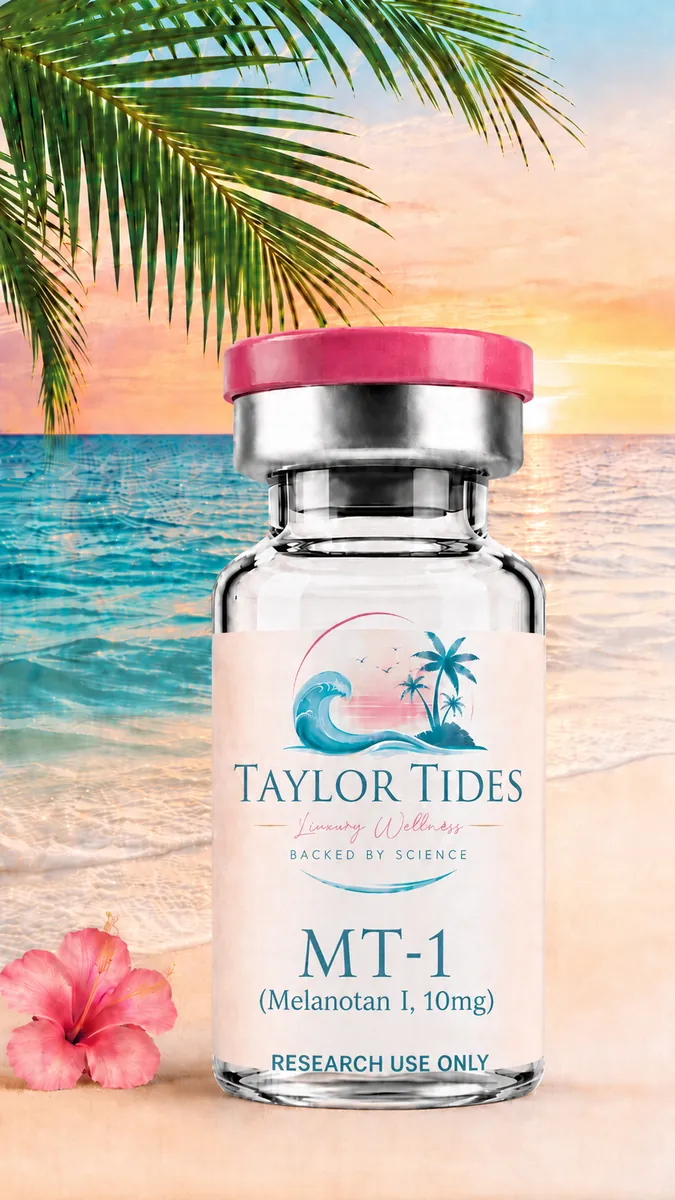
Melanotan 1 peptide is a laboratory-made peptide that tells the skin to produce more melanin. Melanin is the natural pigment responsible for much of the color in the skin, hair, freckles, and moles.
It is also known as MT-1, Melanotan I, and afamelanotide. These names refer to the same peptide, but that does not mean every product using one of these names is the same.
Afamelanotide is used in an FDA-approved prescription implant called Scenesse. This medicine treats a rare condition that causes severe pain after exposure to light. A vial, injection, nasal spray, or tanning product sold online as MT-1 is not the same product as Scenesse.
This page explains what Melanotan 1 is, why people research it, how it differs from Melanotan 2, its possible side effects, and what remains unknown.
Melanotan 1 in 30 Seconds
- What it is: A laboratory-made peptide that tells the skin to produce more pigment.
- Other names: MT-1, Melanotan I, and afamelanotide.
- Why it is researched: Mainly for tanning and skin pigmentation.
- Approved medicine: Afamelanotide is used in Scenesse to treat a rare light-sensitivity condition.
- MT-1 versus MT-2: They are related but different peptides.
- Sun protection: Having more pigment does not make MT-1 a substitute for sunscreen.
- Main concern: Products sold online may not contain the ingredient, strength, or purity stated on the label.
What Is Melanotan 1?
Melanotan 1 is a peptide made from a chain of 13 amino acids. Amino acids are small pieces the body uses to make peptides and proteins.
Scientists designed MT-1 to copy part of a natural signal related to skin color. In simple terms, the peptide tells certain skin cells to produce more melanin.
These pigment-producing cells are called melanocytes. The term is useful to recognize, but the basic idea is simple:
MT-1 sends a message. The skin receives the message and may produce more pigment.
This helps explain why people research Melanotan 1 for tanning. It also explains why freckles and moles may become darker.
Does Melanotan 1 Work Without Sunlight?
Melanotan 1 may increase pigment production without sunlight, but exposure to ultraviolet rays can affect how visibly dark the skin becomes.
Experiences shared online vary. Some people describe gradual darkening without deliberately tanning. Others report little change until spending time in the sun or using a tanning bed.
These personal experiences do not prove that the result is safe or predictable. Natural skin color, UV exposure, individual biology, and the product’s actual contents can all affect the outcome.
Spending more time in the sun or using a tanning bed introduces a different risk. Ultraviolet radiation can damage the skin and increase the risk of skin cancer.
Melanotan 1 is not sunscreen. Darker skin can still burn and suffer UV-related damage.
Melanotan 1, Afamelanotide, and Scenesse
Melanotan 1 and afamelanotide are two names for the same peptide.
Scenesse is an FDA-approved implant containing afamelanotide. It is used in adults with erythropoietic protoporphyria, usually abbreviated as EPP.
EPP is a rare inherited condition that can cause severe pain and burning after exposure to sunlight or certain artificial lights. A person may experience considerable pain even when the skin does not appear badly burned.
A trained medical professional places the Scenesse implant under the skin. The implant slowly releases afamelanotide and helps people with EPP tolerate more light before pain begins.
Human studies of afamelanotide have focused mainly on this medical use. They do not demonstrate that unregulated MT-1 products are safe or effective for cosmetic tanning.
A product sold online as a vial, injection, nasal spray, tablet, or tanning drops may claim to contain the same peptide. That does not make it equivalent to Scenesse. Its contents, strength, purity, storage, and manufacturing quality may be different or unknown.
Melanotan 1 vs. Melanotan 2
Melanotan 1 and Melanotan 2 are related laboratory-made peptides, but they are not the same substance.
| Question | Melanotan 1 | Melanotan 2 |
|---|---|---|
| Other names | MT-1, Melanotan I, afamelanotide | MT-2, Melanotan II |
| Why it is researched | Mainly for tanning and skin pigmentation | For tanning, appetite, and sexual effects |
| Connection to an approved medicine | Afamelanotide is used in Scenesse | There is no FDA-approved Melanotan 2 medicine |
| Common online description | Slower, more gradual pigmentation | Faster pigmentation with more whole-body effects |
Online discussions often describe MT-1 as the gentler or safer option. That conclusion is based mainly on personal experiences and seller claims, not strong comparisons from human studies.
MT-1 was designed to focus more directly on the signal related to skin pigmentation. However, that does not demonstrate that an unregulated product is safe.
The product must still contain the correct ingredient and be manufactured, tested, stored, and handled properly.
For the related compound’s broader effects and safety questions, read the Melanotan 2 peptide page.
Questions About Moles, Freckles, and Skin Cancer
Melanotan 1 may make existing freckles or moles darker or more visible. New dark spots may also appear as the skin produces more pigment.
A darker spot does not automatically mean cancer is present. However, new or changing marks on the skin should not be ignored.
Consult a qualified medical professional if a mole or dark spot:
- Changes in size, shape, or color
- Develops irregular edges
- Contains several colors
- Begins to itch, bleed, crust, or hurt
- Looks noticeably different from other moles
There is not enough reliable human research to conclude that Melanotan 1 directly causes skin cancer. There is also not enough evidence to say that unregulated MT-1 products are safe.
Another concern is increased UV exposure. Someone trying to tan may spend more time in the sun or use tanning beds. Ultraviolet radiation is a known cause of skin damage and skin cancer.
Changes in freckles and moles may also make it harder to identify a suspicious change. Photographs can help track changes, but they do not replace a professional skin examination.
Possible Melanotan 1 Side Effects
Effects reported in connection with afamelanotide or products sold as Melanotan 1 include:
- Darkening of the skin
- Darker freckles or moles
- Headache
- Nausea
- Dizziness
- Tiredness
- Reactions where a product was injected
The approved implant has regulated manufacturing, professional administration, and established safety information.
Products sold online may not offer those protections. A label that says “MT-1” does not prove what the product contains, how much it contains, whether it is sterile, or whether it was stored correctly.
Injections, Nasal Sprays, and Other Forms
Searches for Melanotan 1 may produce:
- Powder in a vial
- Premixed injectable products
- Nasal sprays
- Tanning drops or tablets
- The prescription afamelanotide implant
These forms are not interchangeable.
A nasal spray avoids the use of a needle, but that alone does not demonstrate that the product is safer. The spray could still be mislabeled, contaminated, poorly absorbed, or contain an uncertain amount.
The Scenesse implant should not be grouped with tanning products sold online simply because they claim to contain the same peptide.
What Is the Correct Melanotan 1 Dosage?
There is no FDA-approved dosage for using a Melanotan 1 product purchased online for tanning.
Dosage charts shared by sellers, forums, and social-media accounts may not come from an approved treatment plan. They also assume that the product contains what its label claims.
Scenesse has medical dosing instructions for EPP. Those instructions do not apply to a vial or nasal spray sold online.
Taylor Tides does not provide dosing, mixing, injection, or treatment instructions. Questions about using a peptide or prescription medicine should be discussed with a qualified medical professional.
Is Melanotan 1 FDA Approved?
Afamelanotide is FDA approved as the prescription Scenesse implant for adults with EPP.
It is not approved for:
- Cosmetic tanning
- General sun protection
- Bodybuilding
- Weight loss
- Other uses promoted online
A product marketed as Melanotan 1 or MT-1 is not automatically FDA approved simply because it claims to contain afamelanotide.
Approval applies to the complete medicine, including how it is manufactured, tested, packaged, stored, dosed, and administered. It does not automatically transfer to every product using the ingredient’s name.
Frequently Asked Questions About Melanotan 1
Are MT-1 and Melanotan 1 the same thing?
Generally, yes. MT-1, Melanotan 1, Melanotan I, and afamelanotide refer to the same peptide. However, finished products using those names may be very different.
Is Melanotan 1 the same as Melanotan 2?
No. They are related peptides with different structures and possible effects. Information about one should not automatically be applied to the other.
Is Melanotan 1 a tanning injection?
It is commonly promoted online as a tanning injection. The FDA-approved afamelanotide product is an implant used for a rare light-sensitivity condition, not an approved cosmetic tanning treatment.
Does Melanotan 1 protect against sunburn?
There is no reliable evidence that MT-1 can replace sunscreen or other forms of sun protection. Darker skin can still burn and suffer UV-related damage.
Is a Melanotan nasal spray safer than an injection?
Avoiding a needle removes certain injection-related risks. It does not demonstrate that a nasal product is safe, effective, correctly dosed, or accurately labeled.
What do Melanotan 1 before-and-after photographs prove?
By themselves, they prove very little. A photograph cannot confirm what product was used, how much UV exposure occurred, whether the image was edited, or what side effects developed.
The Bottom Line
Melanotan 1 is a laboratory-made peptide that imitates a natural signal related to skin pigmentation. It is also known as MT-1 and afamelanotide.
Afamelanotide is used in an approved prescription implant for adults with EPP, a rare condition that causes severe pain after light exposure. That approval does not make MT-1 injections, sprays, drops, tablets, or vials sold online approved tanning products.
The most important distinction is not the name on the label. It is the difference between a regulated medicine used for a specific condition and an online product whose contents, strength, purity, and safety may be uncertain. That distinction is essential when researching the Melanotan 1 peptide.
This page provides general educational information. It does not diagnose medical conditions, recommend cosmetic tanning products, provide dosing or injection instructions, or replace advice from a qualified medical professional.
Anyone considering using a peptide or noticing a new or changing mole, freckle, or dark spot should speak with an appropriate medical professional.
Sources and Further Reading
- FDA Scenesse prescribing information
- DailyMed Scenesse afamelanotide implant information
- Melanotan 1 peptide compound record, PubChem
- European Medicines Agency Scenesse product information
- Warning about tanning products containing Melanotan, Therapeutic Goods Administration
- Review of unregulated Melanotan products, International Journal of Dermatology
Author: Taylor Tides. Medical review status: Not reviewed by a licensed clinician. Research reviewed: August 31, 2026.