
Molecule Library
Kisspeptin Peptide: What It Does, Potential Benefits and Side Effects
Helpful information about kisspeptin, reproductive hormones, fertility research, possible side effects, product quality and FDA status.
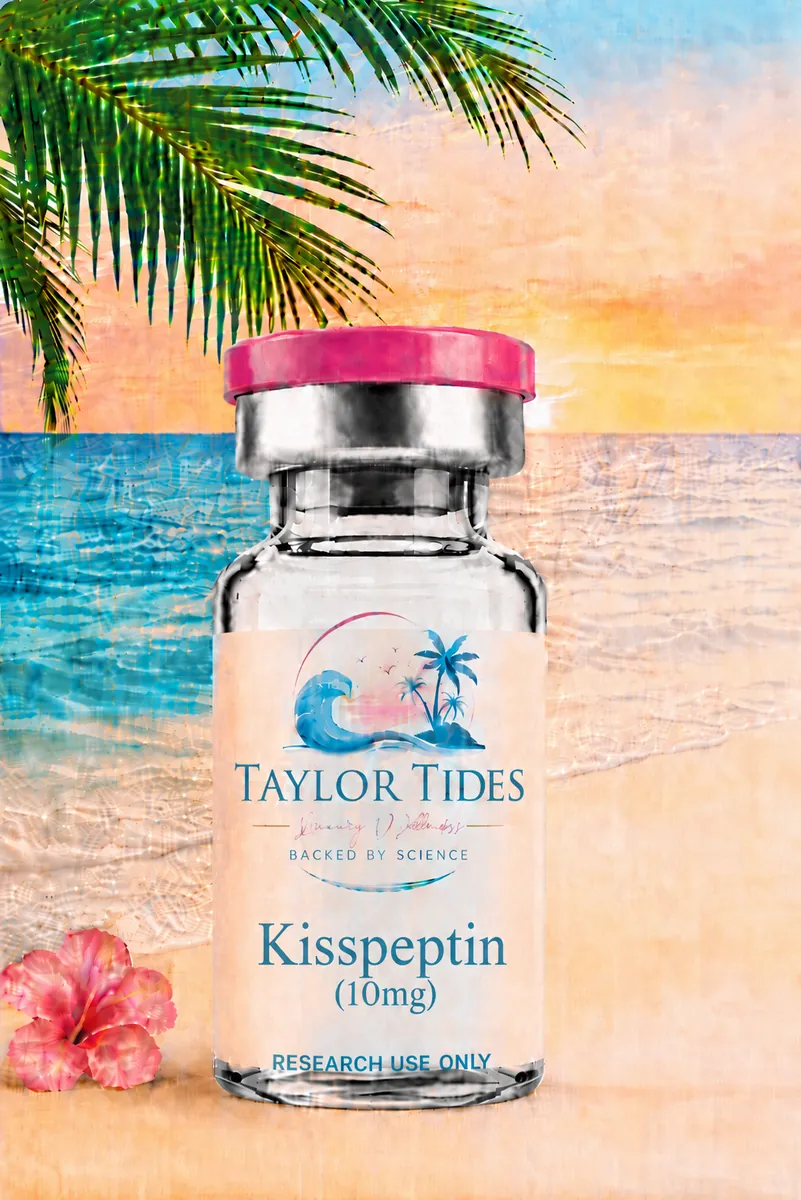
Kisspeptin peptide helps the brain start a chain of hormone messages connected to puberty, ovulation, sperm production, testosterone, estrogen and fertility.
Kisspeptin does not supply those hormones directly. Think of it as one of the body’s natural starting signals. It tells the brain to begin a conversation with the glands and organs that manage reproductive hormones.
Scientists have also made kisspeptin for research. Small human studies show that administered kisspeptin can change certain hormone levels, but that does not prove that every Kisspeptin-10 product improves fertility, raises testosterone or replaces an established treatment.
The important questions are which version was studied, how it was administered, what researchers measured and what remains unknown about its potential benefits, side effects and safety.
Kisspeptin in 30 Seconds
- Kisspeptin is a natural peptide made by the body.
- A peptide is a small group of amino acids joined together for a particular job.
- Kisspeptin starts a message chain involved in reproductive hormones.
- Kisspeptin-10 and kisspeptin-54 are different lengths of the same peptide family.
- Human studies show that kisspeptin can change hormone signals under controlled conditions.
- Research does not establish that commercial Kisspeptin-10 reliably increases testosterone, improves libido, preserves fertility or replaces HCG.
- Kisspeptin-10 is not an ingredient in an FDA-approved drug.
What Is Kisspeptin and How Does It Work?
Kisspeptin is one of the chemical messages the body uses to control reproductive development and function. It is both a peptide and a hormone. “Peptide” describes what it is made from. “Hormone” describes its job as a chemical message.
Kisspeptin starts a series of messages rather than acting directly on the ovaries or testicles.
The basic chain works like this:
- Kisspeptin sends the starting message. It connects with a receiving point in the brain called the kisspeptin receptor.
- The brain releases GnRH. Gonadotropin-releasing hormone, or GnRH, carries the message to the pituitary gland.
- The pituitary releases LH and FSH. The pituitary is a small gland beneath the brain that helps control hormone systems.
- LH and FSH signal the ovaries or testicles. These signals help manage ovulation, sperm production and sex-hormone production.
In ordinary language, kisspeptin starts the conversation, but several other parts of the body must receive and respond to the message.
An increase in LH or FSH therefore does not guarantee an increase in testosterone, estrogen, sperm production, ovulation, fertility or libido. The result depends on which parts of the hormone system are working normally.
The kisspeptin reproductive pathway is well established in biology. Using additional kisspeptin as a treatment is a separate question with much less evidence.
Kisspeptin-10 vs. Kisspeptin-54
The body naturally produces different-length versions of kisspeptin.
- Kisspeptin-54 contains 54 amino acids.
- Kisspeptin-10 contains 10 amino acids and is the shortest portion needed to activate the kisspeptin receptor.
Both can reach the same type of receiving point, but their length affects how long they remain in the body and how researchers use them.
A study involving kisspeptin-54 does not automatically validate a commercial vial containing Kisspeptin-10.
The label “Kisspeptin 10 mg” can also be confusing. In that phrase, 10 mg describes the amount stated on the vial. In “kisspeptin-10,” the number describes the peptide’s ten amino acids. These numbers do not mean the same thing.
Why Are People Researching Kisspeptin?
Interest in kisspeptin centers on reproductive hormones and fertility.
Common questions include whether it can:
- increase testosterone;
- influence ovulation or sperm production;
- affect libido;
- preserve fertility during testosterone replacement therapy;
- replace HCG;
- restart natural hormone signaling after testosterone use; or
- play a role in fertility treatment.
Some questions come from legitimate human research. Others extend beyond what that research has established.
Kisspeptin is scientifically interesting because it acts near the beginning of the reproductive-hormone message chain. Activating part of that chain is not the same as proving a treatment for every condition associated with it.
What Has Actually Been Studied in Humans?
Most human studies have been small, short and conducted under carefully controlled conditions.
Research in Men
An early placebo-controlled study gave kisspeptin-54 to six healthy men through an intravenous infusion. It increased LH, FSH and testosterone during the observation period. Review the male kisspeptin study.
A newer study examined repeated Kisspeptin-10 administration in small groups of healthy men. Reproductive-hormone signaling continued during 12 days of treatment. Review the 12-day Kisspeptin-10 study.
These findings show that kisspeptin can activate the pathway in some healthy men. They do not establish a long-term treatment for low testosterone, infertility or sexual symptoms.
Research in Women and IVF
Kisspeptin research in women has focused on reproductive-hormone signaling, ovulation and fertility treatment.
In one study, kisspeptin-54 helped trigger egg maturation in women undergoing in vitro fertilization, commonly called IVF. Mature eggs were collected and used in fertility treatment. Review the kisspeptin IVF study.
This is meaningful research, but it does not show that Kisspeptin-10 improves natural fertility or increases pregnancy rates outside a controlled fertility program.
Intranasal Research
Researchers have also tested kisspeptin-54 delivered through the nose. A controlled study found that intranasal kisspeptin increased LH in healthy men, healthy women and women with hypothalamic amenorrhea. Review the intranasal kisspeptin study.
Hypothalamic amenorrhea means menstrual periods have stopped because the brain is not sending its normal reproductive-hormone signals. It can be associated with low energy intake, intense exercise or significant stress.
The study shows that nasal kisspeptin can deliver an active signal under research conditions. It does not establish that commercial nasal products have the same identity, concentration, purity, stability or effect.
Does Kisspeptin Increase Testosterone?
Kisspeptin can increase testosterone in some research settings, but it does not act like testosterone replacement.
Testosterone replacement supplies testosterone from outside the body. Kisspeptin begins a message that may eventually tell the testicles to produce testosterone.
For that to happen:
- The brain must respond to kisspeptin.
- The pituitary gland must release LH and FSH.
- The testicles must respond to those signals.
- The body’s feedback controls must allow the process to continue.
Some studies found temporary testosterone increases. Other research found increased LH without a meaningful testosterone increase.
Kisspeptin may stimulate testosterone production under certain conditions, but it is not proven to reliably treat low testosterone.
Kisspeptin and Fertility
Kisspeptin plays an important natural role in fertility because it helps regulate signals involved in ovulation and sperm production.
That does not mean that taking additional kisspeptin will correct every fertility problem.
Infertility can involve hormone signaling, egg development, sperm production, reproductive structures, genetics, medication effects, age and other health conditions. Kisspeptin cannot repair every possible cause.
Research shows that kisspeptin-54 can help trigger egg maturation during supervised IVF. Research has not established that commercially available Kisspeptin-10 reliably improves sperm counts, preserves fertility during testosterone therapy or increases pregnancy rates.
Kisspeptin vs. HCG
Kisspeptin and human chorionic gonadotropin, usually called HCG, affect the reproductive system at different points.
| Question | Kisspeptin | HCG |
|---|---|---|
| Where does it act? | Near the beginning of the message chain in the brain | Farther down the chain, acting on the ovaries or testicles |
| What does it imitate? | A natural brain signal involved in releasing GnRH | A hormone that acts similarly to LH |
| Does it require the brain and pituitary to respond? | Yes | No, it bypasses those earlier steps |
| Is it used in FDA-approved medicine? | Kisspeptin-10 is not | FDA-approved HCG medicines exist for specific uses |
The simplest distinction is that kisspeptin asks the body to start its own message chain. HCG enters later and delivers a more direct signal.
This matters during testosterone replacement therapy. Testosterone supplied from outside the body can tell the brain and pituitary to reduce their natural signals. Because kisspeptin acts near the beginning of that suppressed system, it should not be assumed to replace HCG.
Forum experiences conflict. Some people describe noticeable changes after using kisspeptin. Others report no improvement or no increase in LH, FSH or testosterone. These experiences reveal useful questions, but they cannot establish which treatment is effective or appropriate.
Kisspeptin Side Effects and Safety
Kisspeptin-10 does not have an established long-term safety profile for routine consumer use.
Small human studies generally did not report serious adverse events. However, many studies were brief, included few people and collected limited safety information.
The FDA Kisspeptin-10 evaluation identified important unknowns:
- Long-term human safety has not been established.
- Safety information for repeated injections is limited.
- Intramuscular Kisspeptin-10 has not been adequately studied in humans.
- Peptide impurities or clumping may trigger an unwanted immune response.
- Manufacturing, formulation and storage can affect product quality.
One reported case involved weight gain and increased estrone in a teenager receiving compounded Kisspeptin-10. The report did not contain enough information to prove that kisspeptin caused those changes.
Animal and laboratory research also suggests that a continuous kisspeptin signal may become less effective. Scientists call this tachyphylaxis. In normal language, the body may stop responding as strongly when the same signal remains switched on.
The absence of serious problems in small, short studies does not establish the safety of repeated, long-term or unsupervised use.
Injections, Nasal Products and Product Quality
Human research has used intravenous infusions, injections beneath the skin and experimental nasal delivery. These routes are not interchangeable.
A study involving pharmaceutical-grade kisspeptin-54 delivered through an intravenous infusion does not validate a Kisspeptin-10 vial or nasal spray from another source.
The amount printed on a vial also does not establish:
- the correct chemical identity;
- the amount of active kisspeptin present;
- the absence of unwanted impurities;
- sterility for an injectable product; or
- stability during storage and transportation.
A Certificate of Analysis may provide useful testing information, but it does not prove every aspect of product quality or medical suitability.
Peptides can be affected by heat, light, acidity, concentration and storage. They can also stick together and form clumps called aggregates. These changes may reduce activity or increase the risk of an immune response.
Identity, purity, strength and sterility are different qualities. Passing one test does not prove the others.
Is Kisspeptin FDA Approved?
Kisspeptin-10 is not an ingredient in an FDA-approved drug.
The FDA evaluated it after it was proposed for compounded products intended for male secondary hypogonadism and the preservation of sperm production during testosterone therapy.
Secondary hypogonadism means the testicles may be capable of working, but the brain or pituitary is not sending enough signals to stimulate them.
The FDA concluded that the available information weighed against adding Kisspeptin-10 to the applicable bulk-substances list for compounding. The agency identified insufficient evidence of effectiveness, limited long-term safety information and concerns about product quality.
This does not mean that kisspeptin has no biological effect. Human research shows that it can activate parts of the reproductive-hormone pathway.
It means that biological activity has not established Kisspeptin-10 as an approved treatment with a standardized product, proven medical use and established long-term safety profile.
A “research use only” label does not make a product an approved medicine or prove that it is safe for personal use.
Frequently Asked Questions About Kisspeptin
What is Kisspeptin-10?
Kisspeptin-10 is a ten-amino-acid version of the kisspeptin family. It activates a receptor involved in starting the body's reproductive-hormone message chain. The 10 describes the number of amino acids, not the amount in a vial.
Does kisspeptin increase testosterone?
It can increase testosterone in some research settings, but results are inconsistent. Kisspeptin must activate several working parts of the hormone system before the testicles receive the final signal.
Can kisspeptin improve fertility?
Kisspeptin-54 has helped trigger egg maturation in controlled IVF studies. This does not establish Kisspeptin-10 as a general fertility treatment or prove that it improves sperm counts or pregnancy rates.
Can kisspeptin replace HCG?
Available evidence does not establish Kisspeptin-10 as a reliable HCG replacement. Kisspeptin acts near the beginning of the message chain, while HCG delivers a signal farther downstream.
What are the side effects of kisspeptin?
A dependable long-term side-effect profile has not been established. Small studies generally did not report serious adverse events, but important unknowns include repeated use, long-term hormone effects, immune reactions and product impurities.
Is Kisspeptin-10 FDA approved?
No. Kisspeptin-10 is not an ingredient in an FDA-approved drug.
Is there an established Kisspeptin-10 dosage?
There is no FDA-approved Kisspeptin-10 dosing schedule for increasing testosterone, preserving fertility or improving libido. Research protocols should not be converted into personal dosing instructions.
Does kisspeptin nasal spray work?
A controlled study found that intranasal kisspeptin-54 increased LH under research conditions. That does not prove that every commercial nasal product contains the same substance or produces the same effect.
The Bottom Line
Kisspeptin is one of the body’s natural starting signals for reproductive hormones. It helps begin a message chain involved in puberty, ovulation, sperm production, testosterone, estrogen and fertility.
Human research confirms that administered kisspeptin can activate parts of this system. The response depends on the kisspeptin version, delivery method, study population and whether the rest of the hormone pathway can respond.
The evidence does not establish commercial Kisspeptin-10 as a reliable treatment for low testosterone, infertility or low libido. It also does not establish it as an HCG replacement during testosterone therapy.
Understanding where the signal begins, which version was studied and what researchers actually measured makes it easier to evaluate claims about the kisspeptin peptide.
This page provides general educational information about kisspeptin biology and research. It does not diagnose hormone or fertility conditions, recommend treatment, provide dosing instructions or replace care from a qualified licensed professional.
Hormone symptoms and fertility concerns can have many causes. Testing, diagnosis and treatment decisions should be discussed with an appropriately qualified clinician. Products labeled for research use are not approved medicines for personal treatment.
Sources and Further Reading
- FDA Evaluation of Kisspeptin-10 for the 503A Bulk Drug Substances List
- PubChem: Kisspeptin-10
- The Kisspeptin-GnRH Pathway in Human Reproductive Health and Disease
- Kisspeptin-54 Research in Human Males
- Kisspeptin and Reproductive Hormones in Men and Women
- Chronic Subcutaneous Kisspeptin-10 Research in Healthy Men
- Intranasal Kisspeptin Administration in Humans
- Kisspeptin-54 and Egg Maturation During IVF
Author: TaylorTides. Medical review status: Not reviewed by a licensed clinician. Research reviewed: August 30, 2026.