
Educational Guide
Updated
Bacteriostatic Water: What It Is, How It Differs From Sterile Water and What You Should Know
Helpful information about bac water, sterile water, storage, expiration, vial sizes, product labels and safety boundaries.
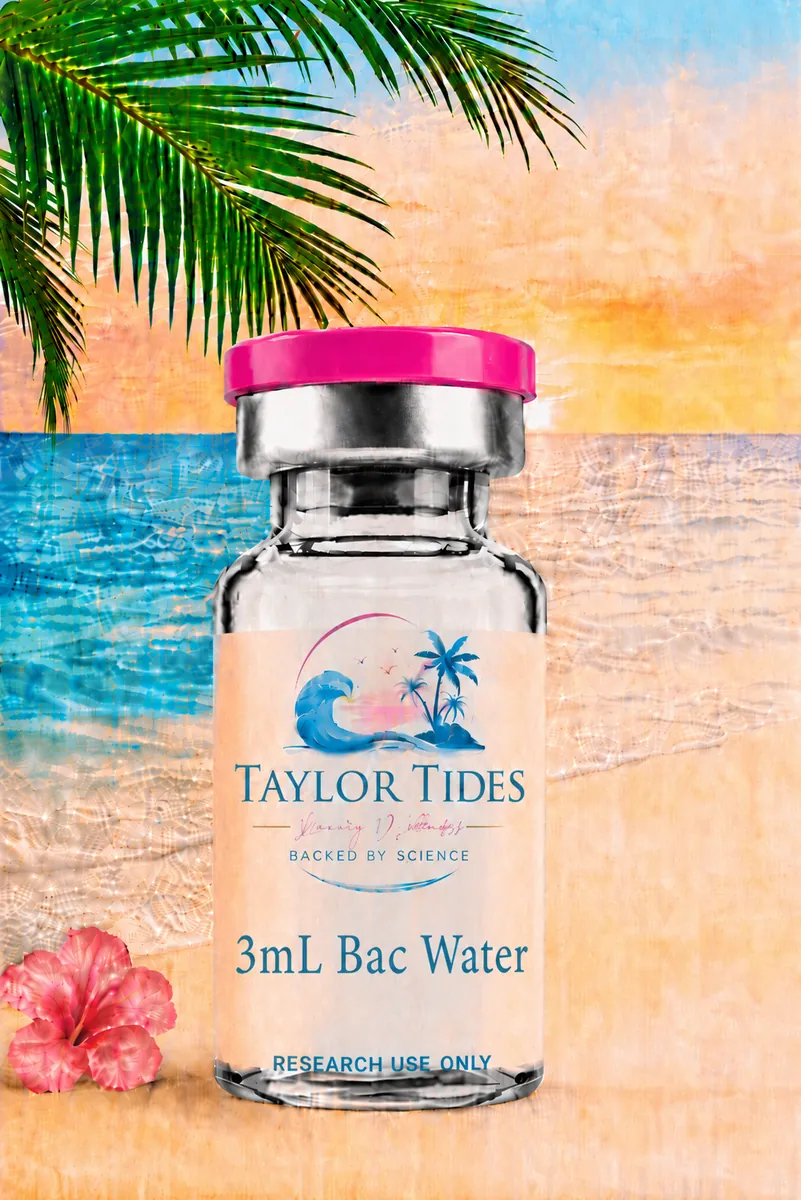
Bacteriostatic water, often shortened to “bac water,” is sterile water with benzyl alcohol added as a preservative. The benzyl alcohol reduces the growth of certain bacteria.
It does not contain a peptide, medication or active treatment. It is a separate liquid used to dissolve or dilute certain medications when specified by the manufacturer or a licensed healthcare professional.
Bacteriostatic water can be confused with sterile water, saline and products labeled “reconstitution solution.” They may look similar, but their ingredients and intended uses can differ.
Bacteriostatic Water in 30 Seconds
- Bacteriostatic water is sterile water with a preservative.
- The preservative is usually benzyl alcohol.
- “Bac water” is simply the common shortened name.
- It is not a peptide or a treatment.
- It usually comes in a multidose vial.
- It cannot always be substituted for sterile water or saline.
- Product identity, labeling, storage instructions and source matter.
What Does “Bacteriostatic” Mean?
“Bacteriostatic” means that it reduces the growth of certain bacteria.
- Bacterio refers to bacteria.
- Static means reducing or stopping growth.
Benzyl alcohol helps limit bacterial growth after a multidose vial has been accessed more than once. It does not eliminate every microbe, prevent every contamination problem or preserve an opened vial forever.
Why Is Bac Water Discussed With Peptides?
Many peptide products come as dry powder inside a vial. A specified liquid must be added before the dry product becomes a liquid solution.
Bacteriostatic water may be used for that purpose, but it is not part of the peptide:
- The peptide is the substance being studied or prescribed.
- Bacteriostatic water is a separate liquid that may be used to dissolve it.
- The correct liquid and amount depend on the instructions for that specific product.
Taylor Tides does not provide reconstitution calculations, mixing recipes, doses or injection instructions.
Bacteriostatic Water Versus Sterile Water
Bacteriostatic water and sterile water are different products.
| Product | What it contains | Typical container |
|---|---|---|
| Bacteriostatic water | Sterile water plus benzyl alcohol | Multidose vial |
| Sterile water | Sterile water without a preservative | Single-dose container |
The preservative in a multidose vial helps limit bacterial growth between entries into the vial. It does not eliminate contamination risk.
Sterile water does not contain a bacteriostatic preservative. Its unused portion is generally discarded after the container is opened.
The appropriate liquid depends on the medication, manufacturer instructions and professional guidance.
Is Reconstitution Solution the Same as Bacteriostatic Water?
For help understanding vial measurements, concentration and storage after mixing, read our peptide reconstitution guide.
Not necessarily. You may see products described as “reconstitution water,” “reconstitution fluid” or “peptide mixing water.” These names describe their intended purpose, but do not tell you exactly what they contain.
Reconstitution means adding a liquid to a dry substance to turn it into a solution. Bacteriostatic water is one possible liquid; the appropriate choice depends on the specific product and its instructions.
Depending on the product, a liquid labeled “reconstitution solution” may be:
- Bacteriostatic water
- Sterile water
- Saline
- Acetic acid
- Another liquid intended for a specific substance
Check the ingredients, preservative, manufacturer and instructions. The words “reconstitution solution” do not establish what the product contains.
What Does Bacteriostatic Water Contain?
Hospira’s standard 30 mL product contains sterile water and 0.9% benzyl alcohol, equivalent to 9 milligrams per milliliter.
Other products may differ. Hospira also offers a product with 20 mL in a 30 mL glass vial that contains 1.1% benzyl alcohol. Research products may use other containers, concentrations or labels.
In technical literature, “Bacteriostatic Water for Injection” is sometimes shortened to BWFI or bWFI. You may encounter this abbreviation when reading about product testing.
Useful label information includes:
- Amount contained in the vial
- Preservative and its concentration
- Single-dose or multidose designation
- Manufacturer or company responsible for labeling
- Lot number and expiration date
- Intended use and storage conditions
Does Bacteriostatic Water Need Refrigeration?
Hospira’s label for Bacteriostatic Water for Injection specifies storage at 20°C to 25°C (68°F to 77°F). It does not instruct users to refrigerate the unopened vial.
These instructions apply to the bacteriostatic water itself. They do not establish the storage temperature or usable life of a medication or research substance after mixing. Those depend on the specific product and its instructions.
Follow the storage instructions printed on your vial and packaging. If those instructions are absent, unclear or contradictory, ask the manufacturer or a pharmacist rather than guessing.
How Long Does Bacteriostatic Water Last?
There are two different time limits:
- The manufacturer’s expiration date for an unopened, properly stored vial
- The opened-vial period, which begins when the stopper is first punctured
CDC guidance says a punctured multidose vial should generally be dated and discarded within 28 days unless the manufacturer specifies a different period. The original expiration date also continues to apply.
Some people report using opened vials longer. Those experiences do not prove that the contents remain sterile or safe.
Hospira 10 mL Versus 30 mL
Hospira sells several water-for-injection products that can look similar.
Current official labeling identifies:
- 30 mL Bacteriostatic Water for Injection: multidose, with 0.9% benzyl alcohol
- 20 mL fill in a 30 mL glass vial: multidose, with 1.1% benzyl alcohol
- 10 mL Sterile Water for Injection: single dose, without an antimicrobial preservative
A 10 mL vial made by Hospira is therefore not automatically Hospira 10 mL bacteriostatic water.
Check whether the label says bacteriostatic water, sterile water or bacteriostatic sodium chloride. Also review the vial size, preservative concentration and single-dose or multidose designation.
Different manufacturers, container materials, volumes and authorized repackaging processes can change how a product looks. Unfamiliar packaging is not automatically fake, but appearance alone does not confirm authenticity or sterility.
How Can You Evaluate Product Identity and Source Credibility?
Check:
- Exact product name
- Documented manufacturer or repackager
- Preservative and concentration
- National Drug Code (NDC), when applicable
- Lot number and expiration date
- Safety seal
- Storage instructions
- Clear solution and an undamaged container
- Whether the seller is a licensed pharmacy or authorized distributor
A National Drug Code (NDC) helps identify a listed drug product. The presence of an NDC does not, by itself, prove FDA approval, authenticity or proper handling. A clear liquid and an intact seal also do not establish that the contents are sterile or authentic.
For prescription products, the FDA recommends using authorized and licensed supply channels. Unusually low prices, unclear manufacturer information or mismatched packaging justify additional review.
Small Vials Versus Larger Quantities
“More bacteriostatic water” can mean more liquid inside one vial or a larger number of individual vials.
Taylor Tides currently offers a 3 mL option and a 30 mL Hospira option. Before comparing them directly, the exact labels, manufacturer or repackager, preservative concentration and multidose status should be confirmed.
Hospira’s 30 mL product is also professionally distributed in packs of 25 and cases containing 100 vials. A larger purchase may therefore mean more sealed 30 mL vials, not one unusually large container.
Warning Signs and Safety Questions
Possible problems include contamination, damaged seals, improper storage, expired products, unclear ingredients and confusion between bacteriostatic water and other liquids.
Do not use a product if it is cloudy, discolored, contains visible particles or has a damaged seal. These signs may not reveal the exact cause, but they are sufficient reason to stop and seek professional guidance.
Bacteriostatic water is labeled as a medication diluent, not an active treatment. It should not be administered by itself.
Hospira’s label also states that bacteriostatic water containing benzyl alcohol must not be used in neonates, meaning newborn infants.
Questions to Ask Before Obtaining Bacteriostatic Water
- Is it bacteriostatic water, sterile water, saline or another liquid?
- Which preservative does it contain and at what concentration?
- Is it single dose or multidose?
- Who manufactured or repackaged it?
- Do the product name, National Drug Code (NDC), vial size and label information match?
- Are the lot number and expiration date visible?
- Which storage instructions appear on the label?
- Is the seller a licensed pharmacy or authorized distributor?
- Is this specific liquid indicated for the corresponding medication or research substance?
If the label and a reliable source cannot answer these questions, the product name alone is not enough.
Frequently Asked Questions
Are bac water and bacteriostatic water the same thing?
Yes. “Bac water” is the common shortened name. The abbreviation does not identify the manufacturer, concentration or intended use.
Is bacteriostatic water a peptide?
No. It is a separate liquid that may be used to dissolve or dilute certain medications or research substances.
Is bacteriostatic water the same as sterile water?
No. Bacteriostatic water contains a preservative and is commonly supplied as a multidose product. Sterile water does not contain a bacteriostatic preservative and is generally supplied for single-dose use.
Does bacteriostatic water need to be refrigerated?
Hospira specifies controlled room-temperature storage at 20°C to 25°C, or 68°F to 77°F. Follow the label on the specific product.
How long can bacteriostatic water be used after opening?
CDC guidance generally specifies a 28-day period for a punctured multidose vial unless the manufacturer states a different period. The original expiration date also continues to apply.
Does an NDC prove authenticity?
No. An NDC helps identify a drug listing, but it does not by itself prove approval, authenticity or proper handling.
This information is provided for general educational and research purposes. It does not provide medical advice, prescribe a product or replace instructions from a medication manufacturer, pharmacist or licensed healthcare professional.
Taylor Tides does not provide individualized reconstitution ratios, mixing calculations, doses, injection instructions or recommendations for extending product use beyond its labeled storage or opened-vial period.
Sources and Further Reading
- DailyMed: Hospira Bacteriostatic Water for Injection, USP
- Pfizer Hospital: Bacteriostatic Water for Injection, USP
- DailyMed: Hospira Sterile Water for Injection, USP
- CDC: Preventing Unsafe Injection Practices
- FDA: Check Licensure of Wholesale Drug Distributors
- FDA: National Drug Code Directory
- FDA: Counterfeit Medicine
Author: TaylorTides. Medical review status: Not reviewed by a licensed clinician. Research reviewed: September 2, 2026.
Understanding the label, preservative, container and source is more useful than relying only on appearance or the shortened name bacteriostatic water.