
Molecule Library
PT-141 Peptide: What Bremelanotide Is, Possible Benefits and Side Effects
Helpful information about PT-141, bremelanotide, sexual-response research, timing, product forms, possible side effects and unanswered questions.
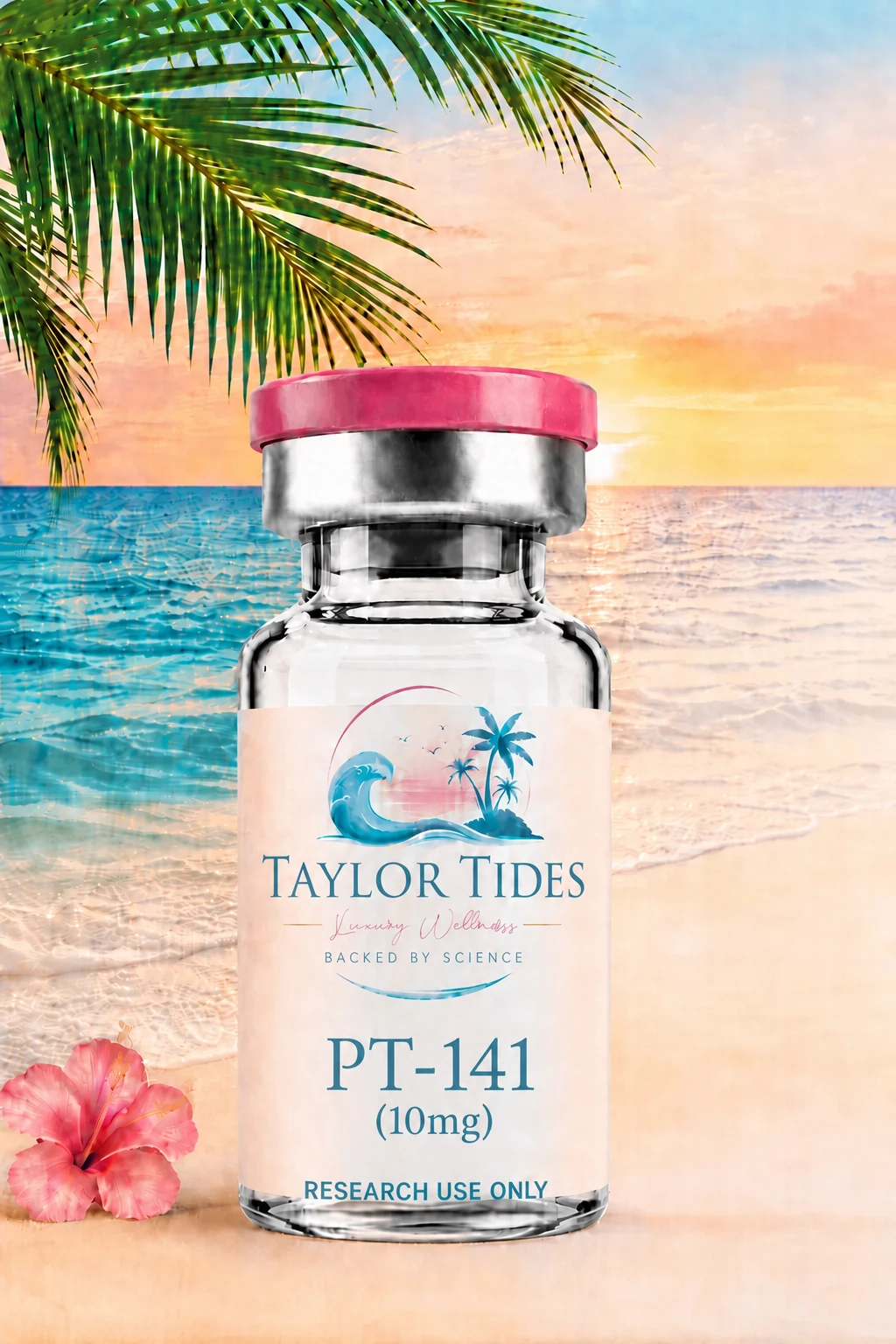
The PT-141 peptide is a laboratory-made compound associated with sexual desire and arousal. PT-141 was its original research name. Bremelanotide is the official drug name.
Unlike medications that primarily improve blood flow, PT-141 acts on signals in the brain related to sexual response. Researchers have studied it in both women and men, but the strongest evidence and its only FDA-approved use apply to a specific group of premenopausal women, meaning women who have not gone through menopause.
PT-141 in 30 Seconds
- PT-141 and bremelanotide are two names for the same peptide.
- It affects brain signals related to sexual desire and arousal.
- It does not work the same way as Viagra or Cialis.
- The strongest research involves certain premenopausal women with persistently low sexual desire that causes personal distress.
- Research involving men exists, but bremelanotide is not FDA-approved for men or erectile dysfunction.
- Nausea is the most commonly reported side effect. Timing, possible benefits, and tolerability vary considerably.
What Are PT-141, Bremelanotide and Vyleesi?
PT-141, officially called bremelanotide, is a synthetic peptide. Synthetic means that scientists manufacture it in a laboratory.
It contains seven amino acids arranged in a ring-like structure. Amino acids are small building pieces that the body uses to make peptides and proteins. That structural detail helps scientists identify the molecule, but it does not indicate whether a finished product is pure, contains the correct amount, is safe, or is appropriate for human use.
Vyleesi is the brand name of an FDA-approved bremelanotide injection. The approved product comes in a prefilled injection device containing a measured amount of the drug.
Its approved use is limited to acquired, generalized hypoactive sexual desire disorder in certain premenopausal women. In plain language, this means the woman:
- Previously had a different level of sexual desire
- Experiences low desire broadly, not only with one partner or in a specific situation
- Feels significant personal distress or relationship difficulties because of it
- Does not have another health condition, medication, mental-health concern, or relationship difficulty that better explains the change
The approval does not include men, postmenopausal women, people with erectile dysfunction, or general sexual-performance enhancement. A vial, nasal spray, troche, pill, or powder sold as PT-141 also should not be considered identical to the approved prescription product.
How Does PT-141 Work?
PT-141 interacts with melanocortin receptors. Receptors are like receiving stations on cells. When they receive a specific chemical signal, they tell the cell or a connected body system how to respond.
The melanocortin system is involved in several functions, including appetite, skin pigmentation, and sexual response. PT-141 activates receptors connected to brain pathways related to desire and arousal.
In ordinary language, PT-141 appears to act closer to the brain’s sexual-response controls than to the blood vessels.
This makes it different from sildenafil, better known as Viagra, and tadalafil, better known as Cialis. These medications primarily help blood reach the penis. PT-141 may influence signals involving desire or arousal. The official prescribing information states that researchers still do not fully understand how activating these receptors produces the clinical effect.
This difference matters because sexual desire, physical arousal, erections, orgasms, and satisfying sexual experiences are related, but they are not the same. Affecting one does not guarantee improvement in all the others.
What Has Actually Been Studied in Women?
The strongest evidence comes from two large clinical trials, or planned studies in people, involving premenopausal women with the specific low-desire condition described above.
Compared with placebo, an inactive comparison treatment, women receiving bremelanotide reported modest improvements in sexual desire and reduced distress related to low desire. The trials did not find a significant improvement in the number of satisfying sexual experiences associated with treatment.
This is an important difference. Bremelanotide may help some women experience more desire or less distress. It does not guarantee more sex, better orgasms, an improved relationship, or a satisfying experience every time.
Nausea, flushing, and headache occurred more frequently with bremelanotide. Most reactions were described as mild or moderate, but nausea caused some participants to stop treatment. The trials were funded by companies involved in developing or marketing bremelanotide, which is relevant context when interpreting the results.
The complete results are available in the published phase 3 bremelanotide trials.
What Do We Know About PT-141 for Men?
Men frequently research PT-141 for libido, erections, and erectile dysfunction. These concerns are related, but they do not mean the same thing:
- Low sexual desire: not feeling interested in sexual activity
- Difficulty becoming aroused: not developing the expected mental or physical response
- Erectile dysfunction: difficulty developing or maintaining an erection
A man may experience one of these difficulties without experiencing the others.
An early placebo-controlled study of nasal PT-141 observed erectile responses in healthy men and men with erectile dysfunction. Healthy participants were assessed without visual sexual stimulation. This was preliminary research, and the study included researchers affiliated with the developer.
A separate 2008 study in men who had not responded to sildenafil carries a journal Expression of Concern issued in 2023. That is a formal warning about the publication, so its reported benefits should not be treated as dependable evidence.
These findings do not establish a reliable treatment for male low desire or erectile dysfunction. They also do not validate the contents, safety, or effectiveness of PT-141 products sold online. Bremelanotide is not FDA-approved for men or erectile dysfunction.
How Long Does PT-141 Take to Work and How Long Do Its Effects Last?
There is no single timeline that applies to every person or product.
The approved bremelanotide injection is intended for use at least 45 minutes before anticipated sexual activity. That instruction does not promise that an effect will appear in exactly 45 minutes.
The Vyleesi prescribing information states that the duration of benefit after a dose is unknown and the best timing has not been fully established. A claimed fixed window of effect should not be treated as a proven expectation.
Part of the confusion comes from people discussing very different products:
- Approved prescription injections
- Preparations made by compounding pharmacies
- Nasal sprays
- Troches, which are medicated tablets that dissolve slowly in the mouth
- Pills
- Unverified research powders
These forms do not necessarily enter the body at the same speed or provide the same amount. Desire, physical arousal, and erections may also begin at different times.
An individual experience cannot establish how quickly a different product will work or how long its effects will last.
Does the Product Form Matter?
Yes. A peptide must reach the body in a form it can use.
The approved bremelanotide product is injected under the skin. This allows a measured amount to enter the body without first passing through the digestive system.
Earlier research studied nasal bremelanotide, and nasal products continue to appear frequently in search results. There is currently no FDA-approved nasal PT-141 product. Products sold online as nasal sprays may differ in concentration, absorption, manufacturing quality, and contents.
Pills and troches raise additional questions. Peptides can be broken apart during digestion, so swallowing PT-141 does not guarantee that a useful amount will reach the bloodstream.
The important question is not only whether it is an injection or a spray. It is whether the specific finished product was properly manufactured, tested, and studied in the form being offered.
PT-141 Side Effects and Safety Concerns
Nausea is the most commonly reported side effect in the Vyleesi clinical trials.
Other reported effects include:
- Flushing or a sudden feeling of warmth
- Headache
- Vomiting
- Tiredness
- Dizziness
- Pain or irritation at the injection site
- Darkening of the skin, gums, or certain areas of the body
Skin darkening may not completely disappear in every person. The risk may increase with more frequent use and may be greater in people with darker skin.
Bremelanotide can also temporarily increase blood pressure and reduce heart rate. According to the current Vyleesi prescribing information, the approved product should not be used by people with uncontrolled high blood pressure or known cardiovascular disease.
The label also warns that Vyleesi can slow stomach emptying and affect the absorption of medicines taken by mouth. It specifically warns against use with oral naltrexone for alcohol or opioid addiction because reduced absorption could undermine that treatment.
Pregnancy is another important precaution. The label advises effective contraception during treatment and stopping Vyleesi if pregnancy is suspected. A qualified clinician should review pregnancy plans and current medications before considering treatment. These precautions are detailed in the prescribing information.
The approved label also limits how frequently Vyleesi should be used. This information cannot safely be converted into a mixing or dosing protocol for powders, sprays, or products with different concentrations.
Is PT-141 the Same as Melanotan 2?
No. PT-141 and Melanotan 2 are related, but they are different peptides.
PT-141 was developed from research involving Melanotan 2. Both interact with the melanocortin system, which helps explain why discussions involving sexual response, nausea, flushing, and skin pigmentation overlap.
Their primary research contexts are different:
- PT-141, or bremelanotide: studied primarily for sexual desire and arousal
- Melanotan 2: commonly discussed for tanning, appetite, and sexual effects, but it is not FDA-approved
An effect experienced with one does not predict the same response to the other. The Melanotan 2 peptide page explains that compound separately.
Common Questions About PT-141
Is PT-141 an aphrodisiac?
PT-141 is often called an aphrodisiac or libido peptide because it is associated with sexual desire and arousal. These labels oversimplify the response. It may affect desire, physical arousal, erections, or none of these.
Does PT-141 work without sexual stimulation?
An early study observed erections in healthy men without visual sexual stimulation. That finding does not establish that PT-141 reliably increases desire, produces an erection in every situation, or has the same effects in women. It also does not validate products sold online. Bremelanotide is not FDA-approved for men or erectile dysfunction.
Can PT-141 darken the skin?
Yes. Darkening of the skin or gums is a recognized risk of prescription bremelanotide, especially with repeated exposure. PT-141 is related to compounds studied for tanning, although that is not its approved purpose.
Is PT-141 a hormone?
PT-141 is a synthetic peptide, not a hormone naturally produced by the human body. It acts on receptors used by the body’s melanocortin signaling system, which is why some descriptions blur the distinction.
Is PTP-141 another peptide?
No recognized peptide called PTP-141 appeared in the authoritative sources reviewed. It appears to be a misspelling of PT-141.
What Remains Unknown?
Important unanswered questions include:
- How well bremelanotide works in men outside limited studies
- Whether it provides meaningful benefits for postmenopausal women
- How compounded and online PT-141 products compare with prescription bremelanotide
- Whether nasal sprays, troches, or pills provide reliable absorption
- What repeated use outside the approved instructions may do over time
- Why timing and reported responses vary so widely
- How often products sold as PT-141 contain the stated amount and purity
Research involving prescription bremelanotide cannot validate every product sold under the PT-141 name.
Conclusion
PT-141 and bremelanotide are two names for the same synthetic peptide. The strongest evidence supports a specifically defined prescription use for certain premenopausal women experiencing low sexual desire that causes distress.
Men and women also research it for libido, arousal, and erections outside that approved use. Early human research suggests possible effects, but the evidence is limited, product quality varies, and nausea can be significant.
The most useful distinction is simple: an approved bremelanotide injection, an online research vial, and a nasal product may share a molecule’s name without offering the same quality, evidence, or safety. This context matters when evaluating claims about the PT-141 peptide.
This information is provided for general educational purposes only. It does not offer medical advice, diagnosis, dosing instructions, mixing directions, or a recommendation to use PT-141 or any other product.
Bremelanotide can affect blood pressure and cause nausea, skin darkening, and other side effects. Sexual concerns can also be related to medications, hormones, cardiovascular health, mental health, pain, menopause, relationship factors, and other medical conditions.
Anyone considering prescription bremelanotide should discuss their symptoms, medical history, medications, and treatment options with a qualified healthcare professional. Products sold as “research use only” have not necessarily been reviewed for human use, purity, potency, sterility, or manufacturing quality.
Sources and Further Reading
- DailyMed: Vyleesi Prescribing Information
- PubChem: Bremelanotide, Also Known as PT-141
- Two Phase 3 Bremelanotide Trials in Premenopausal Women
- Bremelanotide Dose-Finding Trial in Premenopausal Women
- Bremelanotide and Blood-Pressure Monitoring
- 2008 Bremelanotide Study in Men (Expression of Concern issued)
- 2023 Expression of Concern for the 2008 Study
- Early Placebo-Controlled Study of Nasal PT-141 in Men
Reddit and other public forums were reviewed to identify common questions, confusion, and self-reported experiences. Anecdotes were not used as evidence of medical benefits, safety, or appropriate use.
Author: TaylorTides. Medical review status: Not reviewed by a licensed clinician. Research reviewed: September 1, 2026. Evidence and safety corrections: September 10, 2026.