
Molecule Library
DSIP Peptide: What It Is, Sleep Research and Safety
Helpful information about delta sleep-inducing peptide, what human sleep studies found, side effects, unanswered questions and FDA status.
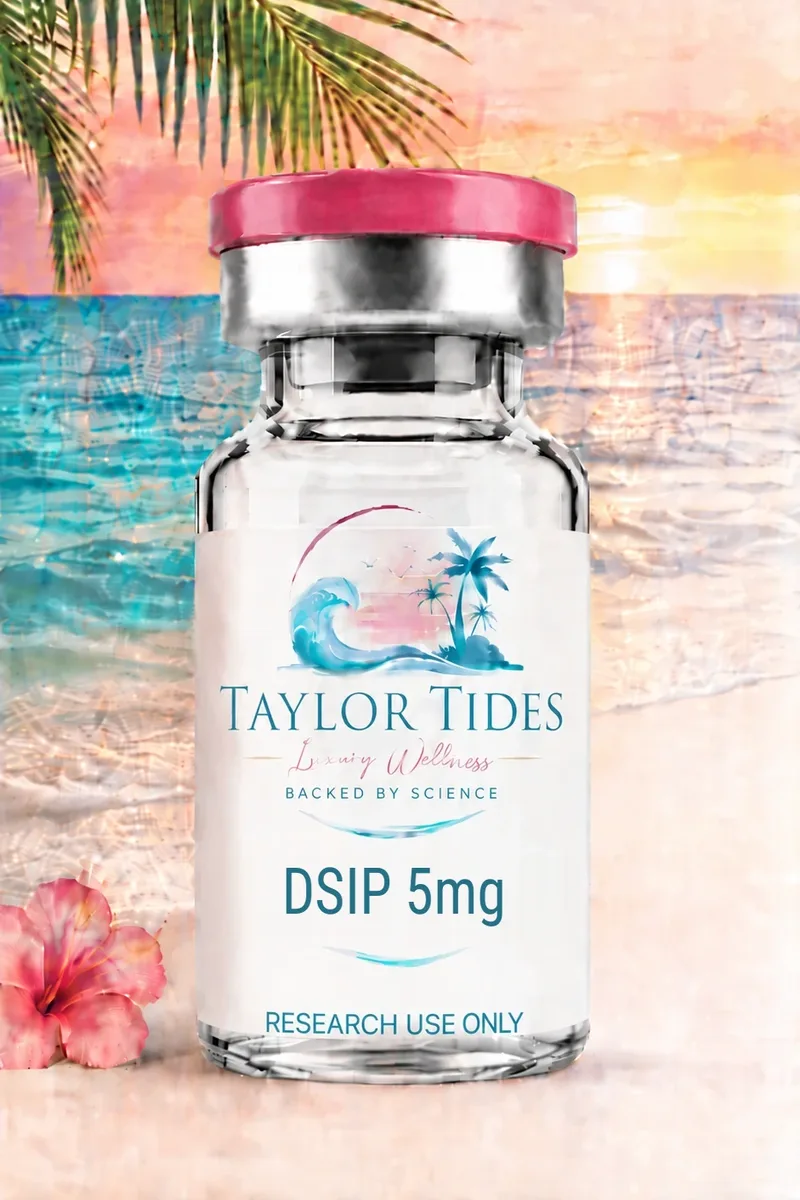
DSIP peptide, short for delta sleep-inducing peptide, is a small laboratory-made peptide researched mainly for possible effects on sleep. Its name is memorable, but the name describes what early researchers hoped it would do, not what later studies proved.
A handful of small human studies from the 1980s and early 1990s produced mixed results. Some reported better sleep in people with chronic insomnia. Independent double-blind studies found effects that were weak or of little practical value. No modern, large clinical trial has settled the question.
This page explains what DSIP is, what the research actually found, what remains unknown and where DSIP stands with the FDA.
DSIP in 30 Seconds
- DSIP is a peptide made of nine amino acids, also called emideltide.
- It was first described in 1977 after researchers isolated it from rabbits.
- Small human insomnia studies produced mixed results, and independent studies found little clinical benefit.
- Scientists have never identified a gene, precursor protein or receptor for DSIP, so its natural role remains unclear.
- DSIP is not FDA approved in the United States.
- In July 2026, an FDA advisory committee narrowly voted against recommending emideltide for pharmacy compounding.
What Is DSIP?
A peptide is a short chain of amino acids, the small building blocks the body uses to make proteins and biological signals. DSIP contains nine amino acids arranged in a specific order.
In 1977, Swiss researchers reported that infusing this peptide into the brains of rabbits increased delta waves, the slow brain waves seen during deep sleep. That finding gave DSIP its name.
Researchers later measured DSIP-like material in human blood and brain tissue. However, decades later, scientists still have not found a gene, precursor protein or receptor that explains how the body would make or respond to DSIP. A 2006 scientific review described DSIP as "a still unresolved riddle" and called the evidence linking it to natural sleep regulation weak.
In plain language: DSIP is real and has been studied for nearly 50 years, but scientists still do not understand what it does in the body.
What Has Been Studied in Humans?
Most human DSIP research took place between 1981 and 1992. In these studies, DSIP was given by intravenous injection, meaning directly into a vein, under laboratory supervision.
Early Positive Reports
A series of studies, mostly from one research group in Switzerland, reported that DSIP improved sleep in people with chronic insomnia. In one 1986 study of 18 people with long-term insomnia, researchers reported that sleep moved toward normal patterns after a week of DSIP injections. A small 1984 open study of 7 people with severe insomnia also reported improvement.
Independent Double-Blind Studies
In a double-blind study, neither participants nor researchers know who receives the real substance and who receives a placebo. This design helps prevent expectations from shaping the results.
A 1987 double-blind study in people with chronic insomnia found some sleep measures improved, but concluded the improvement was "of little clinical significance."
A 1992 double-blind study of 16 people with chronic insomnia found small improvements in sleep efficiency and time to fall asleep. The researchers noted that these effects were weak and partly explained by an unexpected change in the placebo group. People's own ratings of their sleep did not improve. The authors concluded that DSIP was not likely to be of major benefit for chronic insomnia.
What Do These Studies Tell Us?
- The studies were small, often involving fewer than 20 people.
- Much of the positive data came from a single research group.
- Independent double-blind studies found weak or clinically unimportant effects.
- DSIP was injected into a vein in a laboratory, not self-administered.
- No large modern trial has tested DSIP for insomnia.
- The studies do not establish long-term safety.
The responsible conclusion is that DSIP has a limited and conflicting record in human sleep research. It is not a proven treatment for insomnia.
Other Areas of Research
Opioid Withdrawal
A few small reports in the late 1990s explored DSIP during opioid withdrawal, including a 1998 report of an open clinical trial. Open studies do not use a placebo comparison, which makes their results hard to interpret.
Withdrawal from opioids or alcohol can be dangerous and requires medical supervision. DSIP has not been shown to be a safe or effective way to manage it.
Stress, Hormones and Other Claims
Laboratory and animal studies have explored possible links between DSIP and stress hormones, body temperature, pain, seizures and aging. Research in cells or animals helps scientists decide what to study next. It does not prove that DSIP provides those benefits in people.
What this means: These remain research questions, not proven human benefits.
DSIP Side Effects and Safety
Reliable safety information about DSIP is limited.
The older human studies were small, short and supervised. They were not designed to detect uncommon, delayed or long-term problems. The absence of strong evidence showing harm is not proof that DSIP is safe.
Important questions remain unanswered, including long-term use, interactions with sleep medicines, opioids and other medications, use during pregnancy or breastfeeding and the safety of injecting products bought online.
Anyone with ongoing insomnia should talk with a healthcare professional. Persistent sleep problems can be linked to sleep apnea, depression, anxiety, pain, medications or other conditions that have effective, evidence-based treatments.
Product Quality Questions
A label saying "DSIP" does not prove what is inside a product.
Products may differ in chemical identity, purity, strength, sterility, storage and label accuracy. The FDA has noted possible concerns about peptide-related impurities and how fully emideltide has been chemically characterized.
A certificate of analysis is useful only if it matches the exact batch and comes from a qualified independent laboratory. A purity percentage alone does not confirm sterility or suitability for human use.
Is DSIP FDA Approved?
No. DSIP is not an FDA-approved medicine in the United States.
The FDA has stated that compounded drugs containing emideltide may pose a risk of immune reactions for certain routes of administration and may have complexities involving peptide-related impurities. The agency also stated that it lacked sufficient safety information to know whether emideltide would cause harm in humans.
On July 24, 2026, the FDA's Pharmacy Compounding Advisory Committee voted 6-7, with one abstention, against recommending emideltide for the list of substances that pharmacies may use in compounding. It was proposed for insomnia, narcotic dependence and opioid withdrawal. FDA staff cited a lack of safety and effectiveness data and the availability of approved treatments for those conditions. Committee votes are advisory, and the final decision belongs to the FDA.
This status does not prove that DSIP has no possible benefit. It means an FDA review has not established its safety, effectiveness or manufacturing quality.
Frequently Asked Questions About DSIP
What is DSIP?
DSIP stands for delta sleep-inducing peptide. It is a small peptide made of nine amino acids that was first described in 1977 after researchers isolated it from rabbits. It is also called emideltide.
Does DSIP help you sleep?
Small human studies from the 1980s and early 1990s reported mixed results. Some reported better sleep in people with chronic insomnia, while independent double-blind studies found effects that were weak or of little clinical significance. DSIP is not a proven sleep treatment.
Is DSIP FDA approved?
No. DSIP is not an FDA-approved medicine in the United States. In July 2026, an FDA advisory committee voted 6-7, with one abstention, against recommending emideltide for the list of substances that pharmacies may use in compounding.
Is DSIP the same as emideltide?
Yes. Emideltide is the official nonproprietary name for the nine-amino-acid peptide known as delta sleep-inducing peptide.
Does the body make DSIP?
Researchers have measured DSIP-like material in human blood and brain tissue. However, scientists have never identified a gene, precursor protein or receptor for DSIP, so its natural role remains unclear.
What are the side effects of DSIP?
The older human studies were too small and short to establish a reliable side-effect profile. Long-term safety, medication interactions and the safety of products sold online are unknown.
Is DSIP used for opioid withdrawal?
A few small, uncontrolled reports from the 1990s explored DSIP during opioid withdrawal. These reports do not establish that DSIP is safe or effective for withdrawal, which requires medical supervision.
The Bottom Line
DSIP is a nine-amino-acid peptide that has been researched for possible effects on sleep since 1977.
Early reports were encouraging, but independent double-blind studies found weak or clinically unimportant effects, and no large modern trial has confirmed a benefit. Scientists still do not understand its natural role in the body.
DSIP is worth understanding because of its long research history. It should still be approached as an incompletely studied substance rather than a proven sleep aid.
This information is provided for general educational purposes only. It is not medical advice and does not diagnose, treat, cure or prevent insomnia or another medical condition.
Taylor Tides does not provide DSIP dosing, reconstitution, injection, cycling, stacking or withdrawal-management instructions.
Anyone experiencing persistent insomnia, loud snoring or pauses in breathing during sleep, substance withdrawal, depression or thoughts of self-harm should seek help from a qualified healthcare professional. Do not stop or change a prescription medication without medical guidance.
Sources and Further Reading
- Characterization of a delta-electroencephalogram (sleep)-inducing peptide (1977)
- Efficacy of DSIP to normalize sleep in middle-aged and elderly chronic insomniacs (1986)
- DSIP efficacy on short-term administration to chronic insomniacs (1987)
- Effects of DSIP on sleep of chronic insomniac patients: a double-blind study (1992)
- Opioid detoxification with DSIP: results of an open clinical trial (1998)
- Delta sleep-inducing peptide (DSIP): a still unresolved riddle (2006)
- FDA: Bulk drug substances and safety risks (emideltide)
- RAPS: FDA advisory committee rejects emideltide for compounding list (July 2026)
Author: TaylorTides. Medical review status: Not reviewed by a licensed clinician. Research reviewed: October 7, 2026.